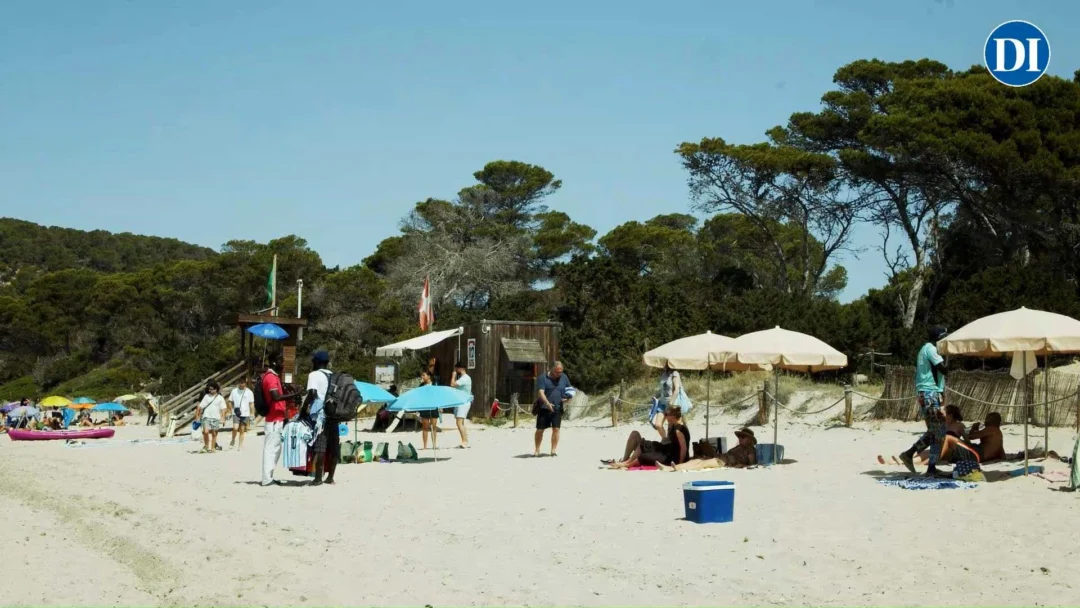
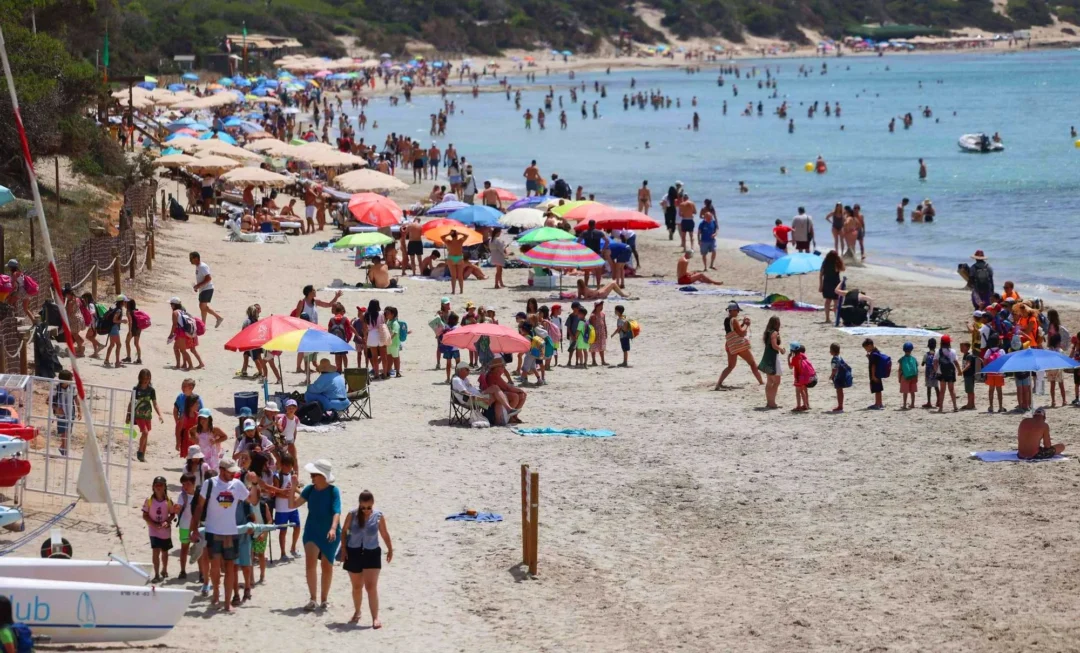
As the morning sun rises over Ses Salines Beach, one of Ibiza’s most iconic stretches of coastline, the day begins much like any other. School groups occupy the northern section of the beach, children splash in the shallow waters and tourists settle beneath parasols. Nearby, several street vendors prepare for another long day under the Mediterranean heat.
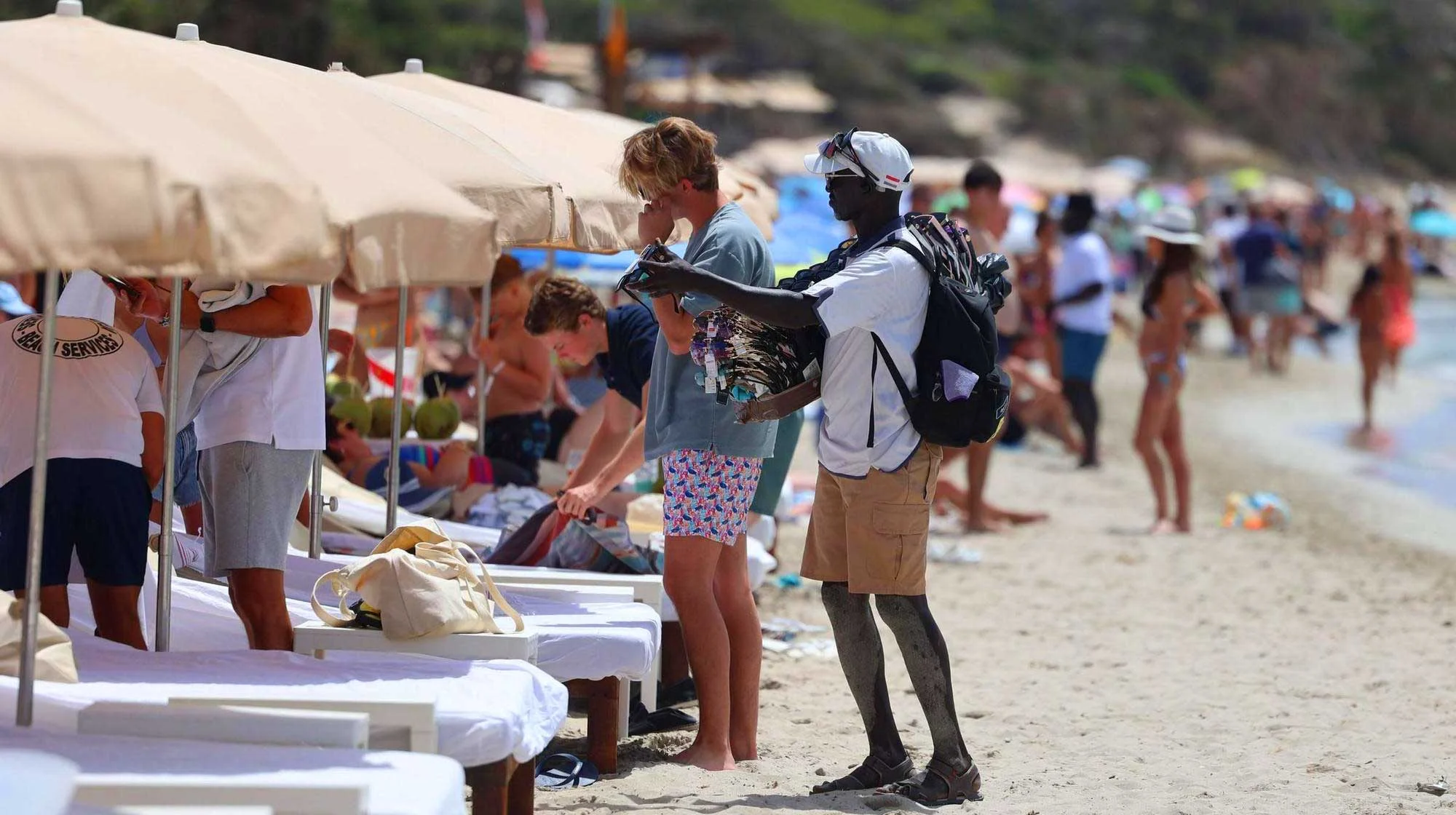
Walking the length of the beach reveals the scale of a phenomenon that has become a familiar part of Ibiza’s summer landscape. Along the 1.5-kilometre shoreline, around twenty vendors move continuously among sunbathers, targeting visitors who appear likely to spend. Many focus on international tourists, offering products ranging from designer-style sunglasses and beachwear to souvenirs and football shirts.
The sales pitch is simple and direct. Counterfeit sunglasses are displayed on portable racks, often resembling luxury brands so closely that many tourists struggle to distinguish them from authentic products. Bargaining quickly follows, and transactions are completed within minutes before vendors continue along the beach in search of new customers.
An Informal Economy on the Sand
From morning until evening, the routine rarely changes. Vendors walk long distances carrying merchandise under intense temperatures, taking occasional breaks in shaded areas and relying on cold water to endure the heat.
The range of products and services available is extensive. Fresh fruit, chilled drinks, beach umbrellas, sunglasses and large Ibiza-branded sarongs are among the most common items for sale. Some vendors provide services such as massages or hair braiding, creating a parallel economy that operates alongside the official tourism sector.
This summer, the ongoing FIFA World Cup in the United States has also found its way onto the beach. Unofficial jerseys representing some of the world’s biggest football stars and national teams can be purchased throughout Ses Salines. Tourists can leave the beach wearing shirts associated with players such as Lionel Messi, Kylian Mbappé or Cristiano Ronaldo.
The vendors appear highly organised. Merchandise is regularly replenished throughout the day, often arriving from hidden storage points near the beach. Goods are distributed among sellers before being displayed to potential customers. Most products originate from manufacturing centres in Asia and are imported into Europe through informal supply chains.
Many of the vendors working on Ibiza’s beaches come from Senegal and argue that limited employment opportunities and immigration challenges leave them with few alternatives. For some, street vending has become a seasonal occupation that follows tourist flows between mainland Spain and the Balearic Islands. However, authorities maintain that organised networks profit from the trade and that the activity extends far beyond individual sellers seeking income.
Ibiza Authorities Intensify Enforcement
Local authorities have recently stepped up enforcement efforts against illegal street vending. Earlier this week, officers from the municipality of Sant Josep de sa Talaia confiscated approximately 200 counterfeit football jerseys in the Port des Torrent area, along with imitation luxury handbags. Financial penalties totalling €1,500 were also issued, and the seized goods will be destroyed.
Municipal officials argue that illegal street vending is often linked to organised criminal networks that exploit vulnerable workers while generating significant profits through counterfeit merchandise.
The crackdown is set to intensify further on 4 July, when a new Civic Coexistence Ordinance comes into force. Under the new regulations, not only vendors but also customers who purchase goods from unlicensed sellers may face fines of up to €750.
By targeting demand as well as supply, local authorities hope to reduce the economic incentives that sustain the illegal trade. The strategy mirrors policies adopted elsewhere in Spain, where penalties are directed at consumers as a means of discouraging unlawful activities.
For Sant Josep, home to some of Ibiza’s most famous beaches, the battle against illegal vending has become an annual challenge. At the centre of that struggle lies Ses Salines, a destination known for its white sand, crystal-clear waters and affluent international visitors. Every summer, the beach becomes both a symbol of Ibiza’s tourism success and the focal point of an ongoing effort to regulate the island’s informal economy.