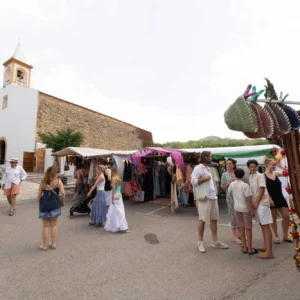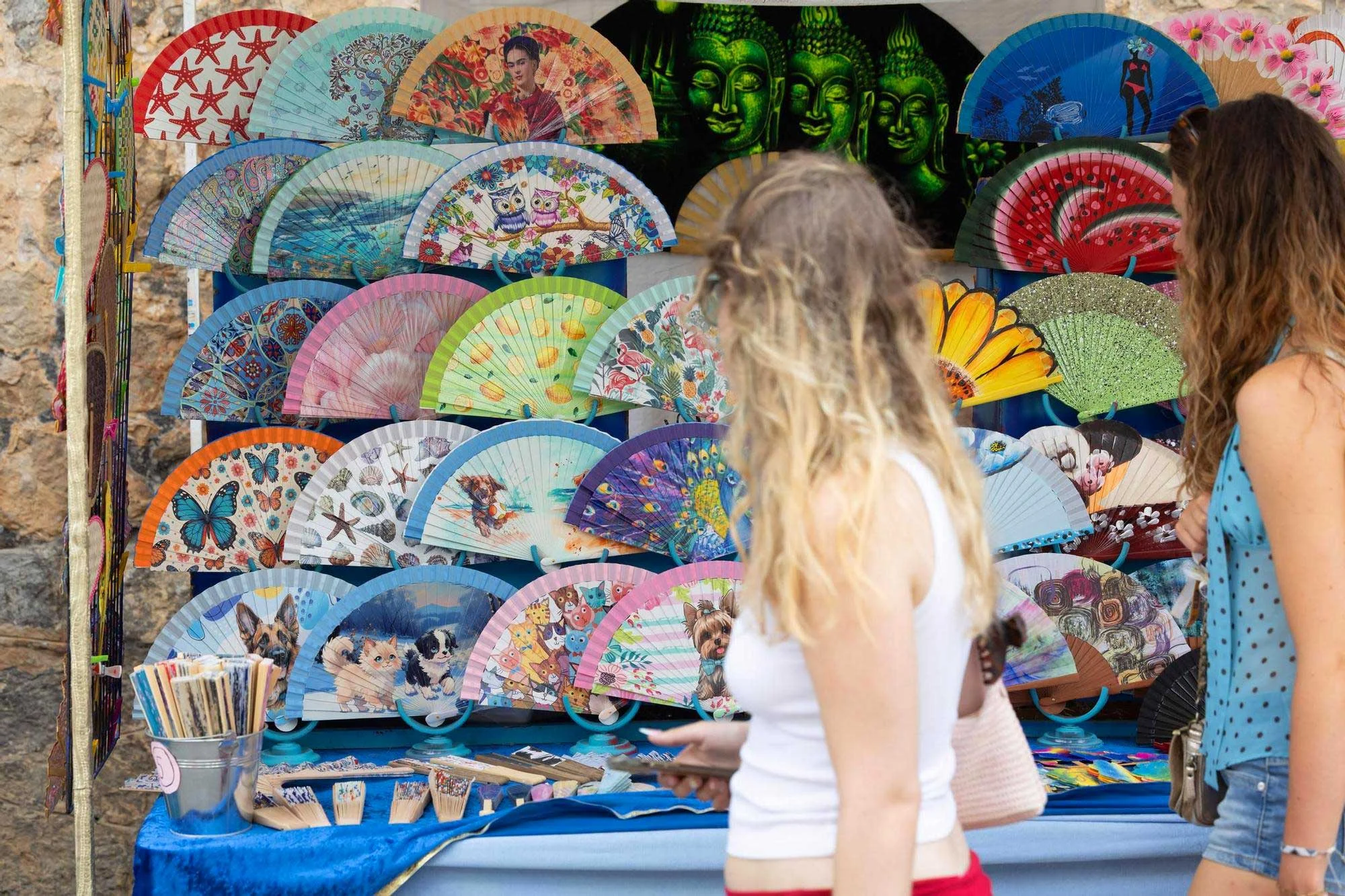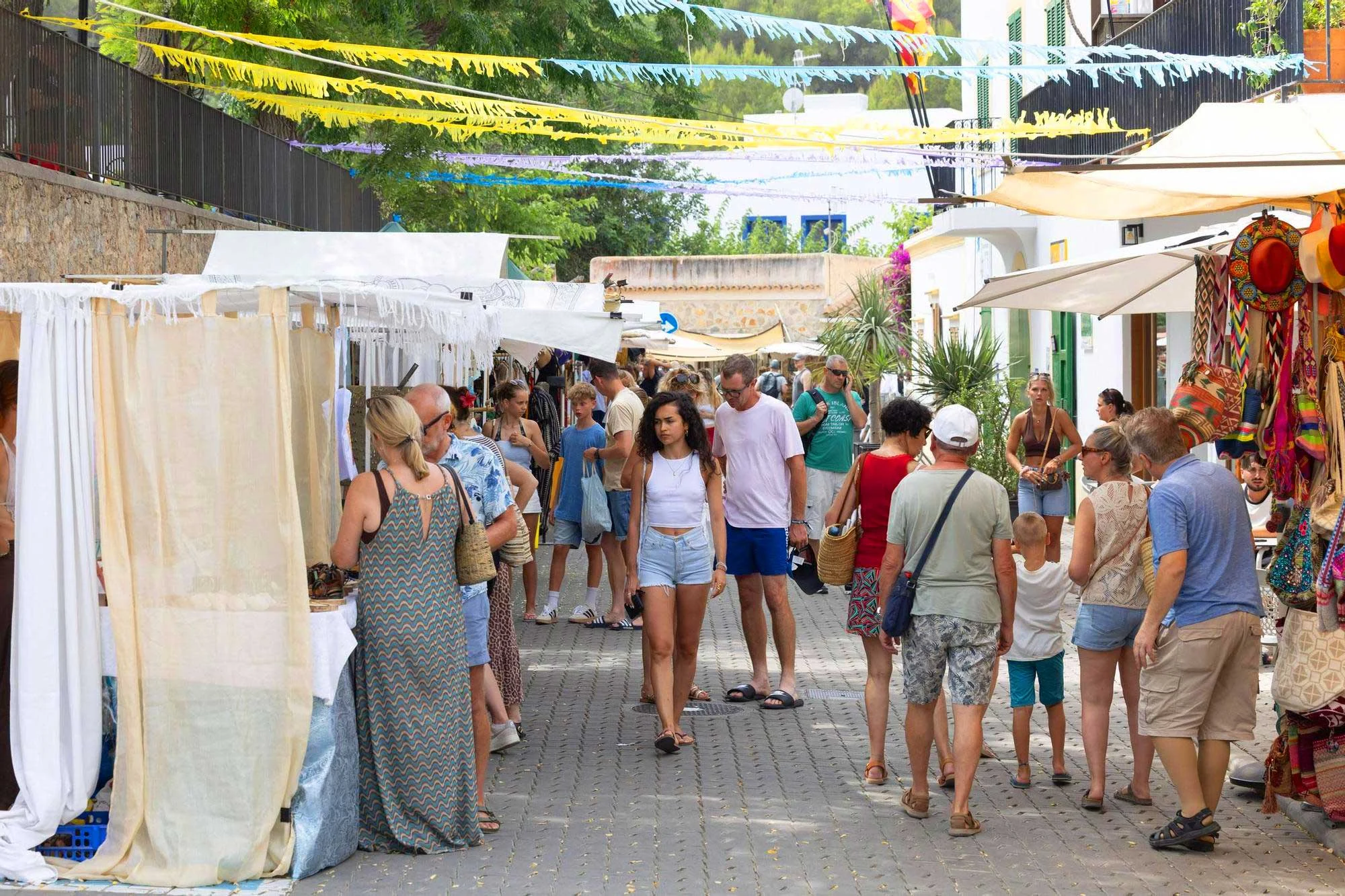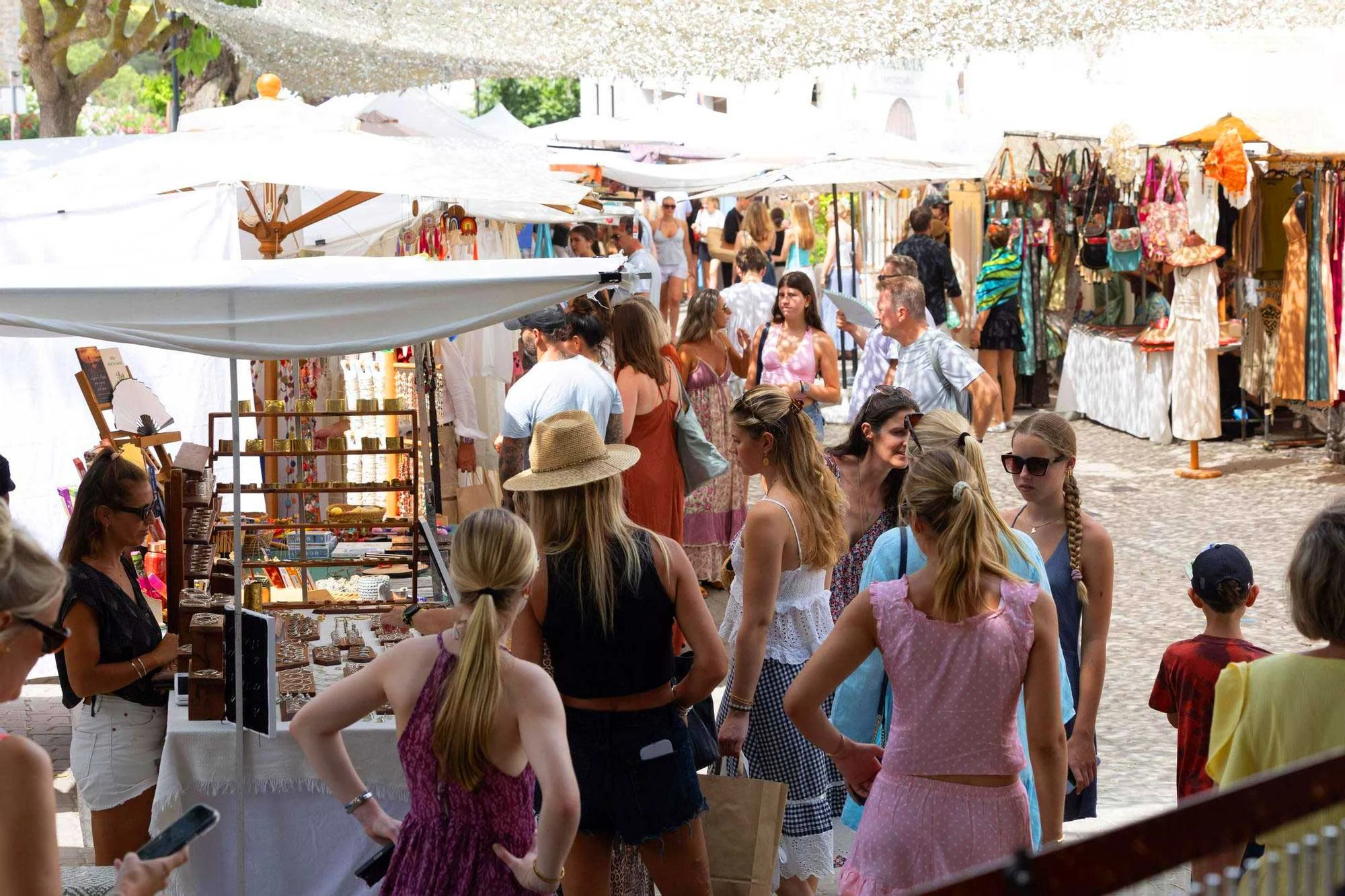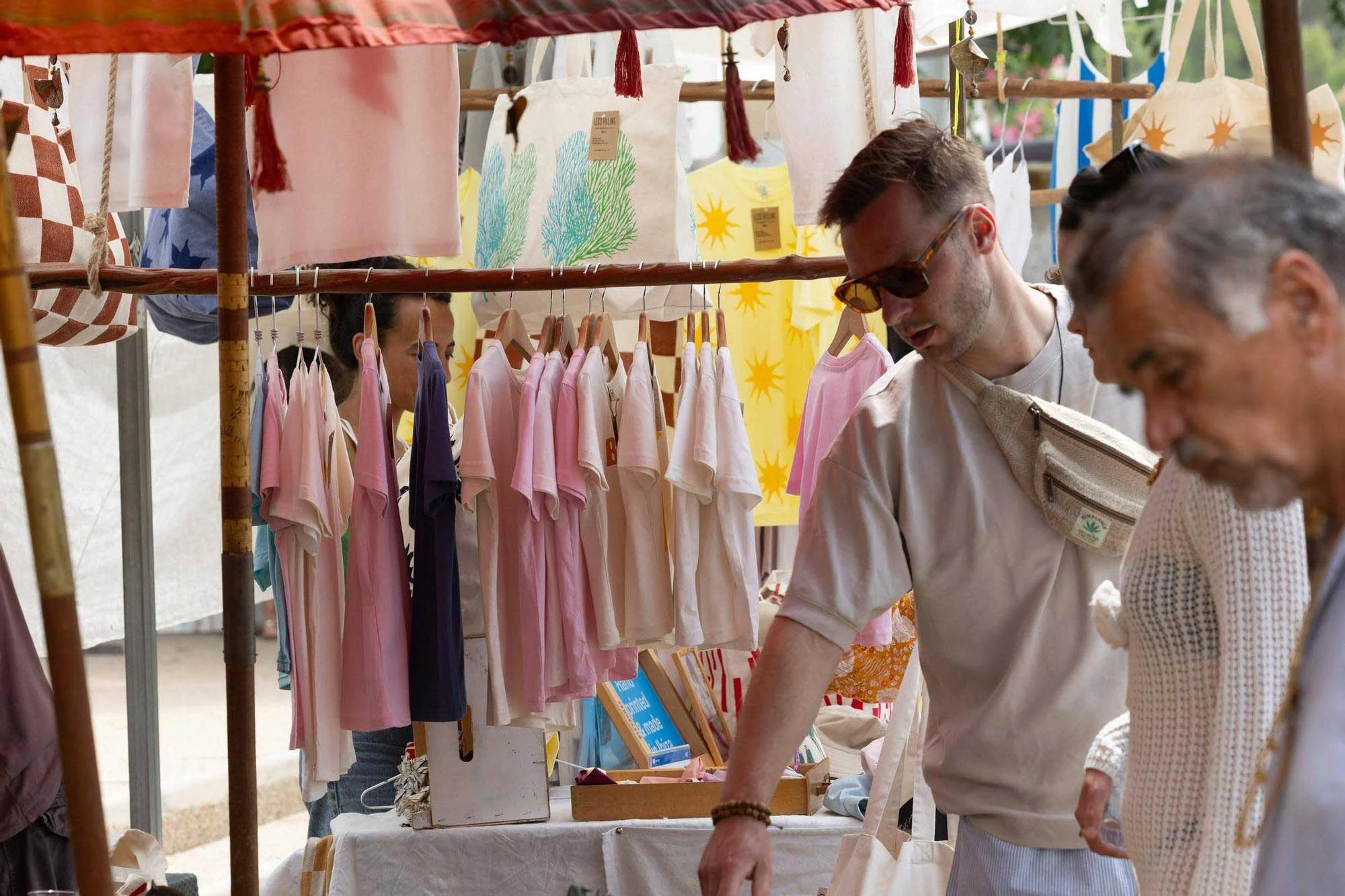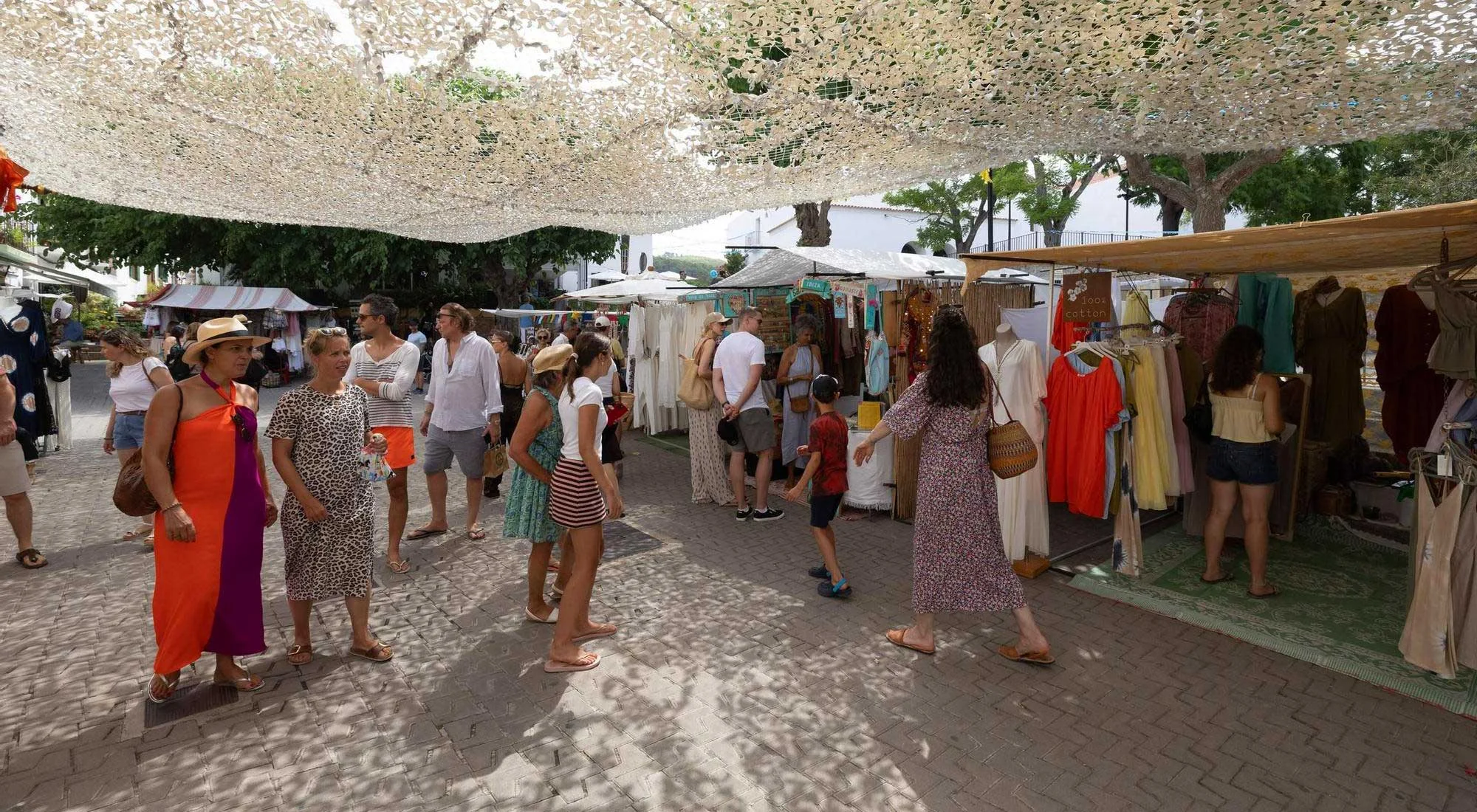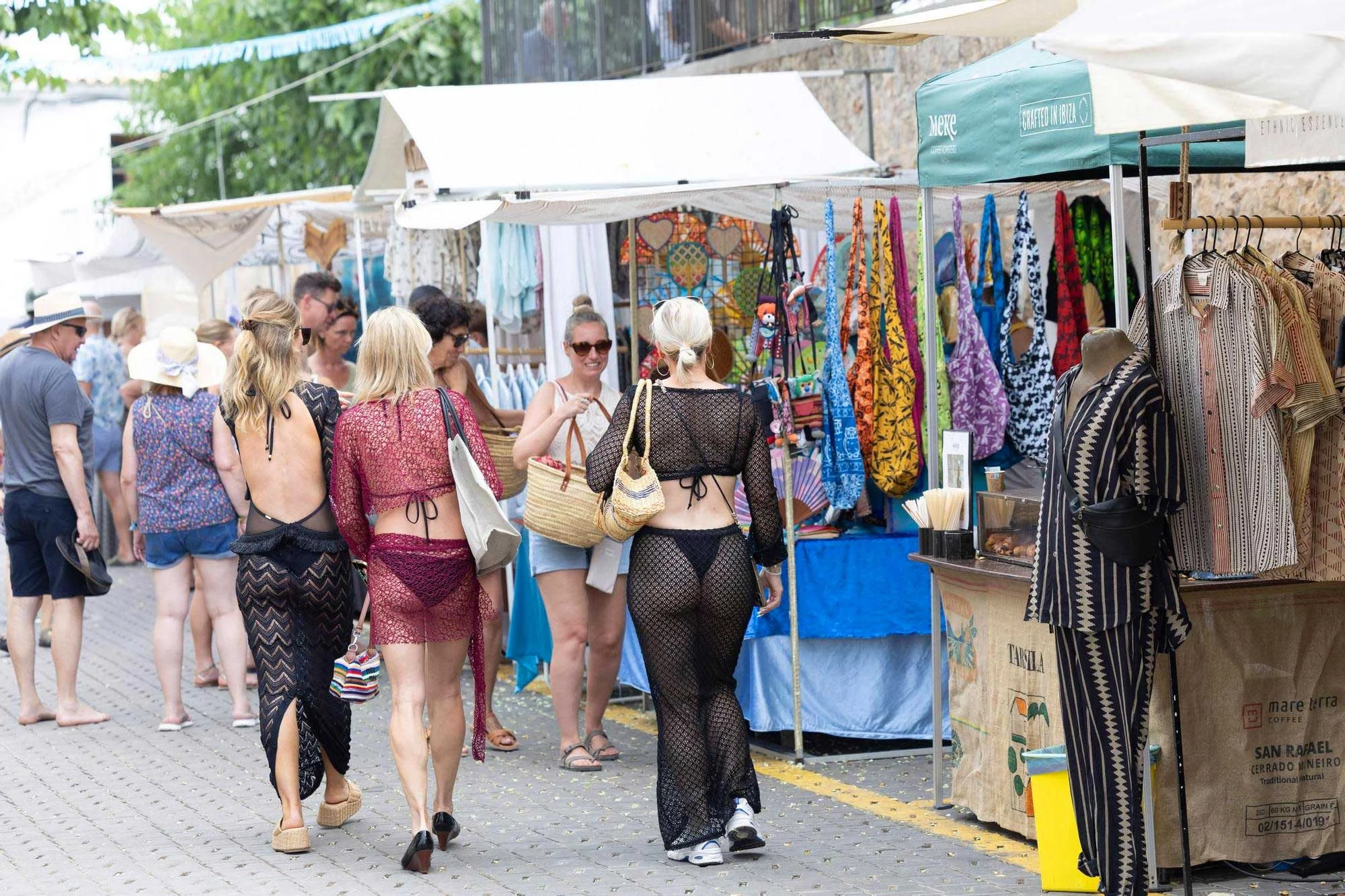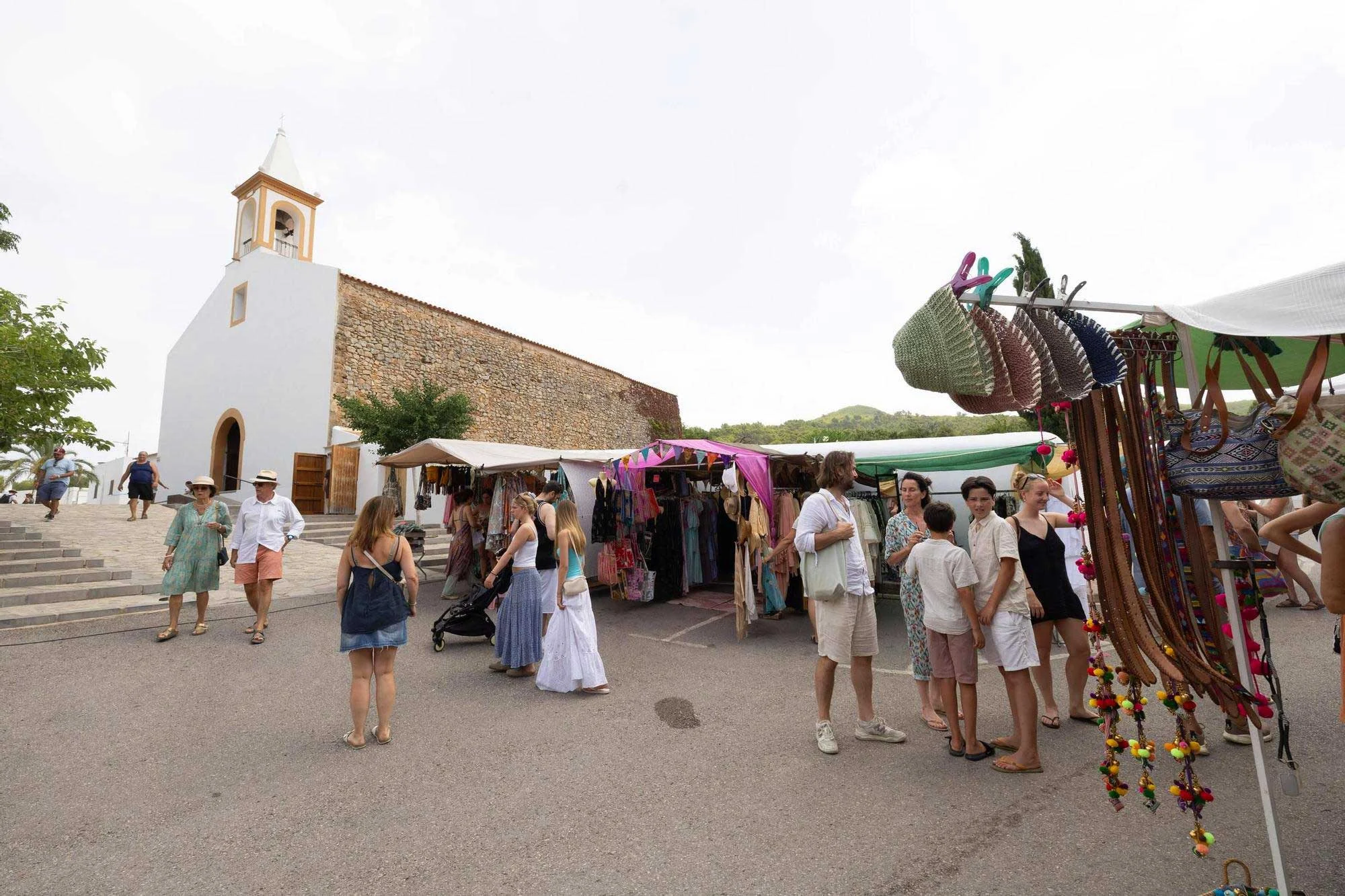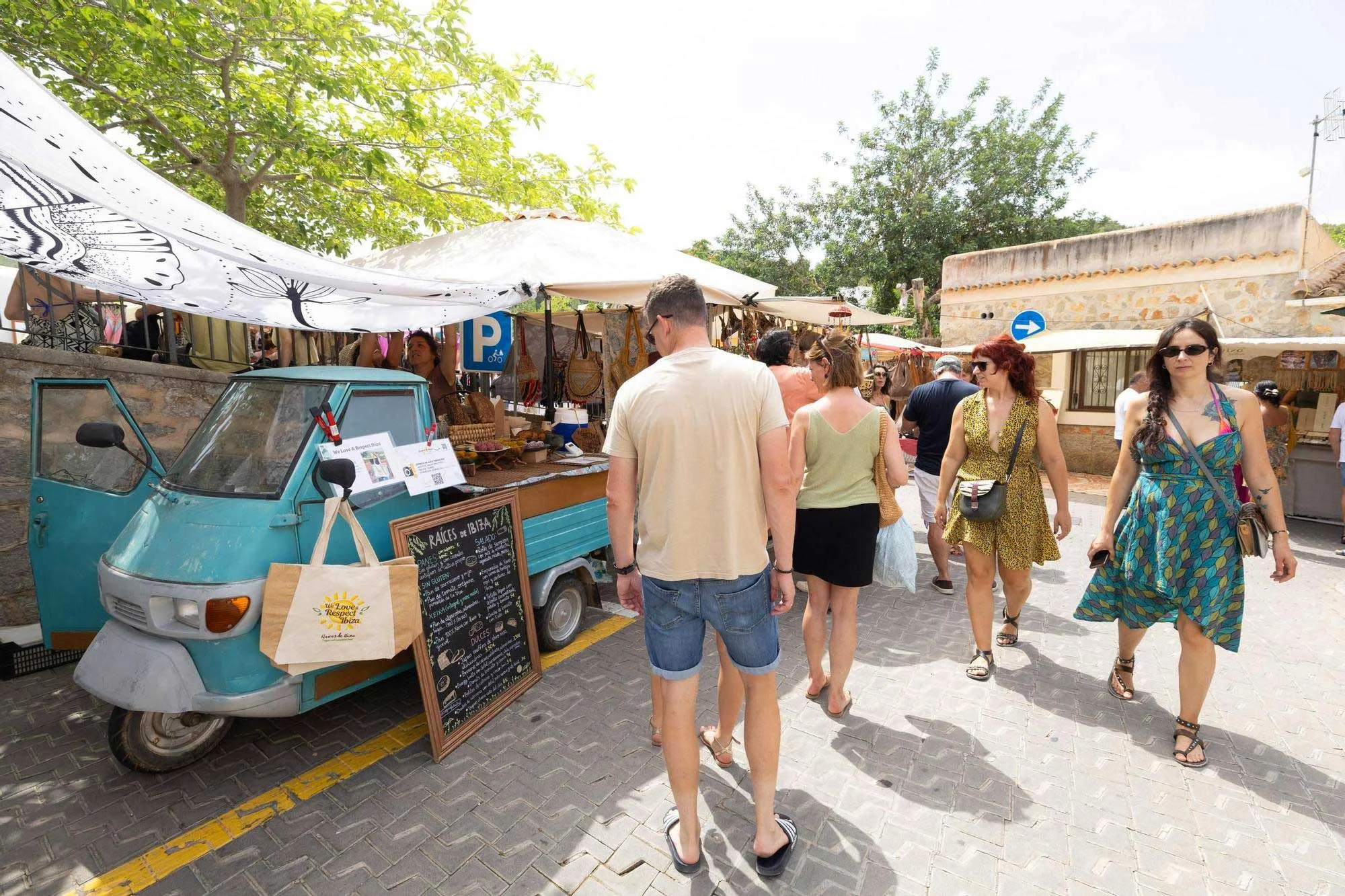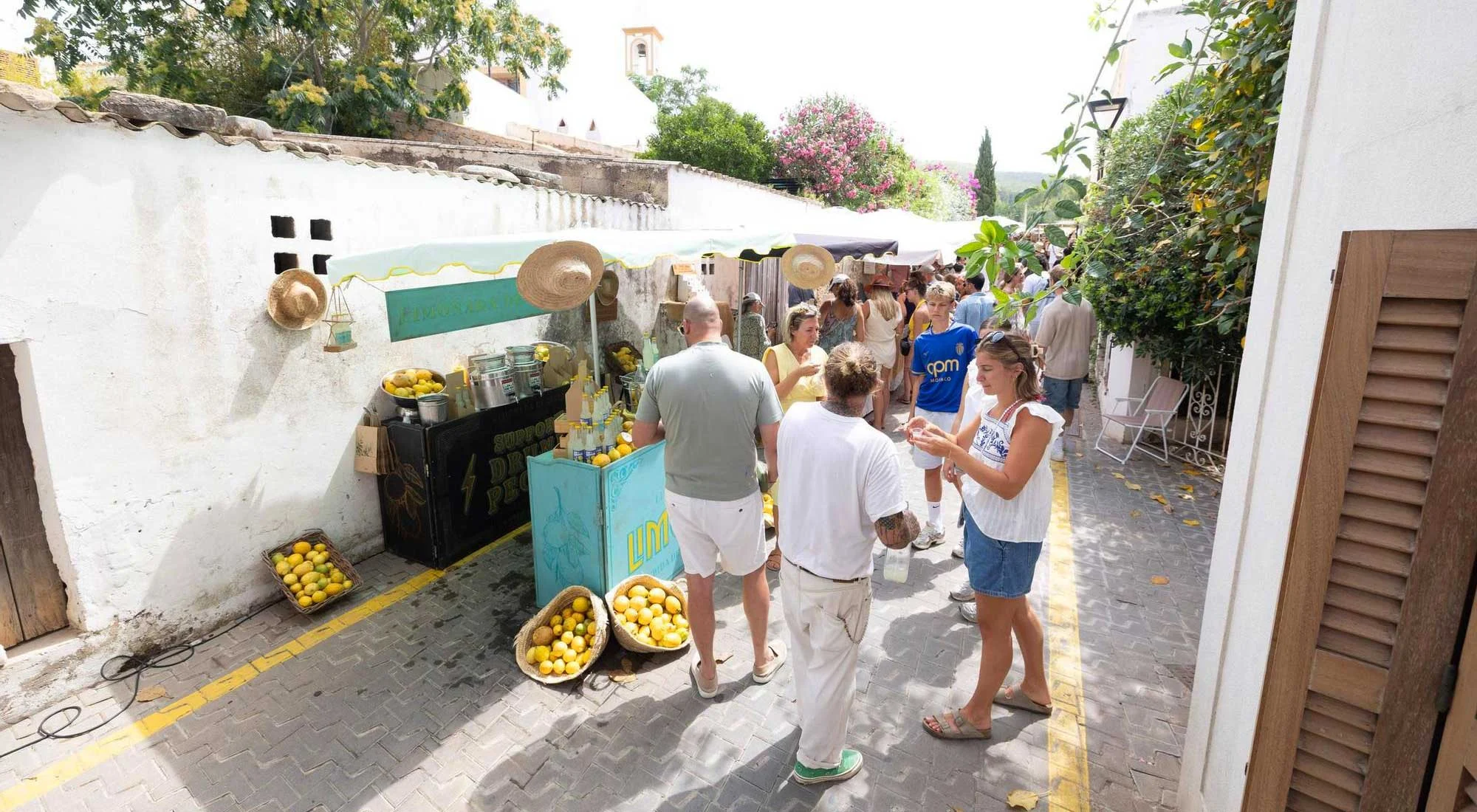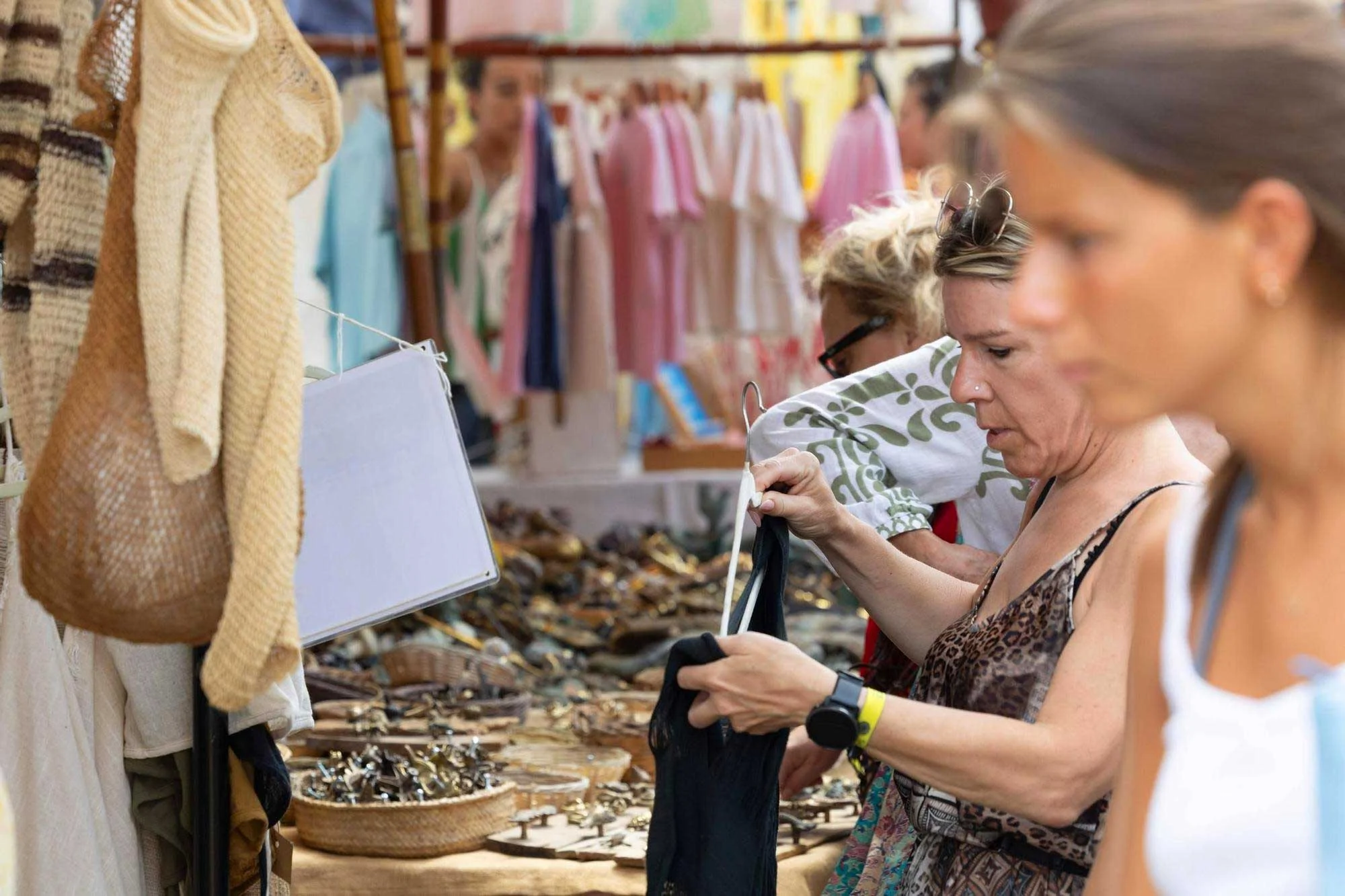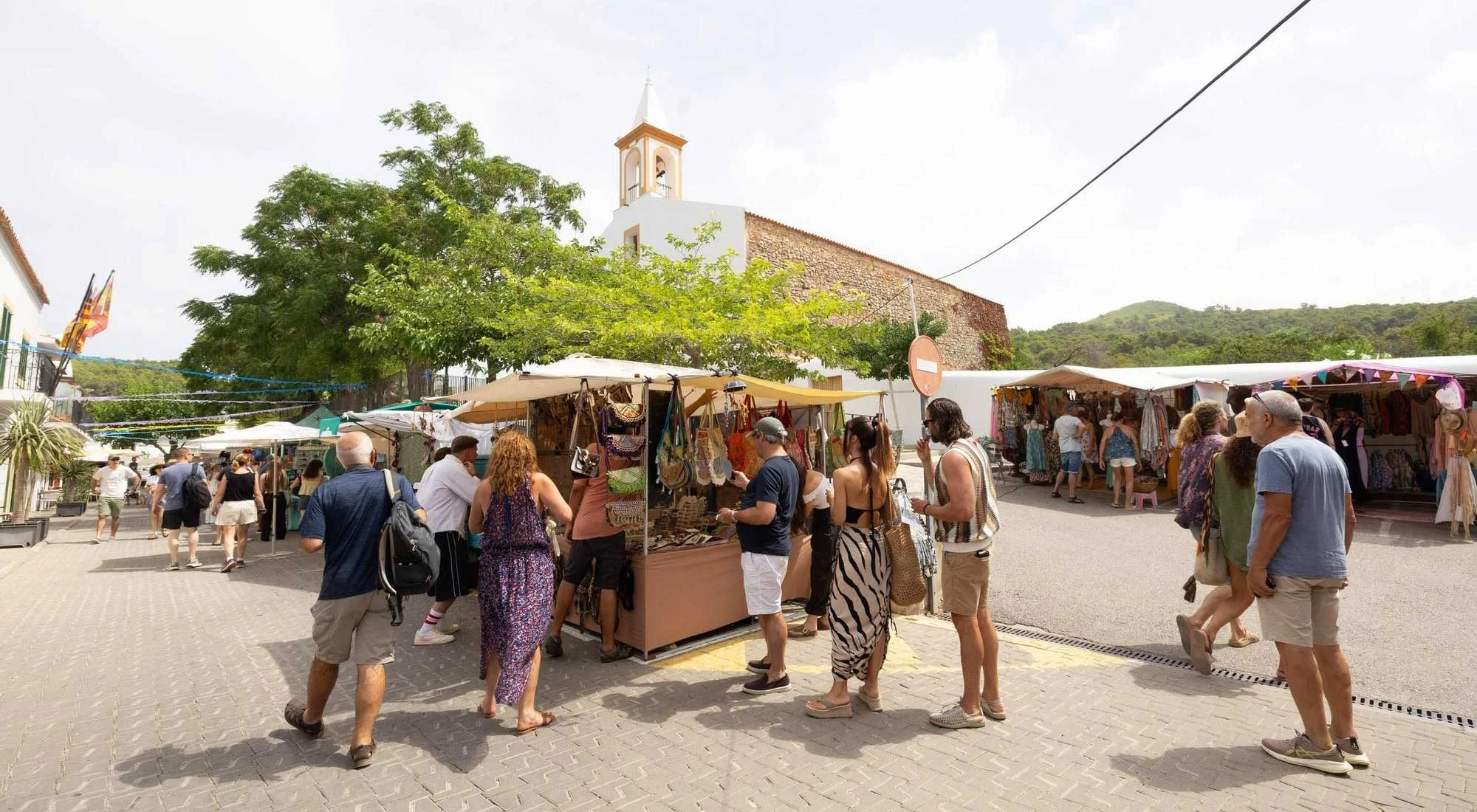
Sant Joan Market, one of Ibiza’s most authentic artisan markets, officially opens every Sunday at 10 a.m., but eager visitors often arrive well before the stalls are fully set up. Among them is Paola Podestá, founder of Blossom Ibiza, who begins preparing her fashion stand as early as 7:30 a.m. to welcome the first shoppers of the day.
Despite the economic challenges affecting tourism, Podestá remains cautiously optimistic.
“The cost of living has increased and visitors are staying for shorter periods, but people are still coming to Ibiza, and that’s the positive side,” she says.
She notes that the market attracts not only international tourists but also many foreign homeowners living in northern Ibiza, a loyal audience that continues to support local artisans.
For Álvaro Martín, owner of Mybiza Handmade, the season has actually improved.
According to Martín, sales have increased by 20–30% compared with last summer, thanks largely to a strong base of returning customers from different countries and a pricing strategy that has kept products at the same prices year after year.
He believes Sant Joan Market stands out from other markets on the island because of its live music, carefully selected food and drink stalls, manageable size and relaxed atmosphere.
“It’s not overcrowded. There’s a genuine sense of community among the vendors, and visitors appreciate the quality of the handmade products,” he explains.
That opinion is shared by Pedro Sellés, who has coordinated the market for the past year.
Managed by the Sant Joan Town Council, the market currently hosts around 90 traders out of 95 available pitches, a size Sellés believes perfectly suits the small village.
“Sant Joan is a small community, and we don’t want the market to overwhelm the village or inconvenience residents,” he says.
Heatwave Reduces Afternoon Visitor Numbers
Although Sellés considers the season broadly similar to 2025, he acknowledges that July has started more slowly than expected.
He attributes the decline primarily to the intense heatwave affecting Ibiza, particularly during the afternoon when temperatures peak.
The market operates from 10 a.m. until 4 p.m., but according to Sellés, visitor numbers begin to fall sharply after 2:30 p.m., when the summer sun becomes especially intense.
Throughout July, the market is also organising a humanitarian campaign collecting medicines for people affected by the recent earthquakes in Venezuela, adding a charitable dimension to the weekly event.
Recovery Still Incomplete After the Pandemic
Anna Parent, founder of the artisan jewellery brand Imperfections and president of the Sant Joan Market Vendors’ Association, believes the market is still feeling the long-term effects of the pandemic.
She explains that although tourism has recovered, visitor numbers have not yet returned to pre-pandemic levels, a trend she believes is affecting businesses across Ibiza.
“Over the last two or three years we’ve seen fewer visitors, and that has had a direct impact on sales, at least in my experience,” she says.
Parent highlights several features that make Sant Joan Market unique, including its live music programme, its location in the heart of the village, nearby cafés and restaurants, and free parking.
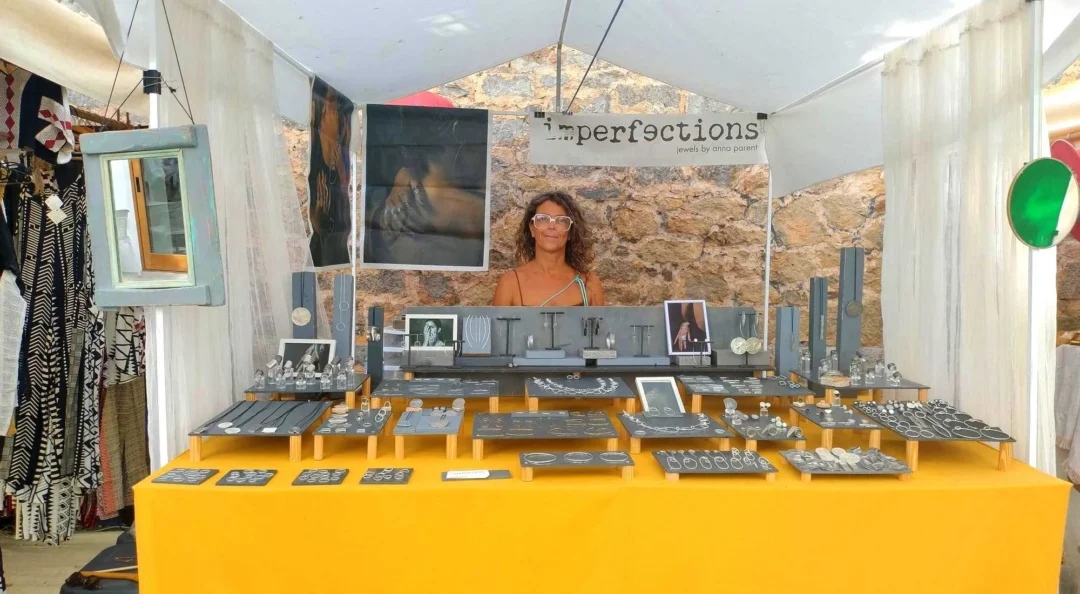
However, she would like to see closer communication between traders and the local council to improve day-to-day management.
Mixed Summer Performance Across the Market
Not every trader shares the same experience.
Anna Forgas, founder of the clothing brand Gitanna, says the season started significantly slower than previous years around Easter but has improved since the end of June.
For her, the market’s greatest strength remains its small, exclusive character, something she has valued since joining when the market first opened in 2012.
Luz Cortés, owner of natural soap brand De Ángel, also praises the market’s friendly, family-oriented atmosphere and reasonable prices, although she believes additional parking spaces would benefit visitors.
While she has noticed a slight decline in customer numbers at other Ibiza markets this summer, she says Sant Joan has remained relatively stable.
Others have experienced a different reality.
Rita Rainaldi, who sells traditional educational toys, reports significantly lower sales than in 2025.
She believes the rising cost of travelling to Ibiza, together with higher accommodation prices, is making tourists think twice before purchasing souvenirs.
Football and High Temperatures Affect Attendance
Some traders also point to another unexpected factor: football.
Cristina, founder of vegan food stall Raíces de Ibiza, believes both the exceptional heat and the FIFA Club World Cup have contributed to lower attendance this July.
“I’ve been at Sant Joan Market since the very beginning, and every time there’s a World Cup, visitor numbers drop,” she says.
For Saigo Dicenta, one of the founders of the market and owner of a stall selling musical instruments and incense, however, commercial performance is only part of the story.
“For me, what really matters is that the market is full of life. You can’t put a price on that,” he says, highlighting the market’s year-round commitment to art, culture and community.
Today, Sant Joan Market continues to be regarded as one of Ibiza’s most distinctive artisan markets, combining local craftsmanship, live music, gastronomy and village life. While this summer’s trading conditions have been shaped by record temperatures, changing tourism patterns and international sporting events, its strong community spirit remains one of its defining attractions.