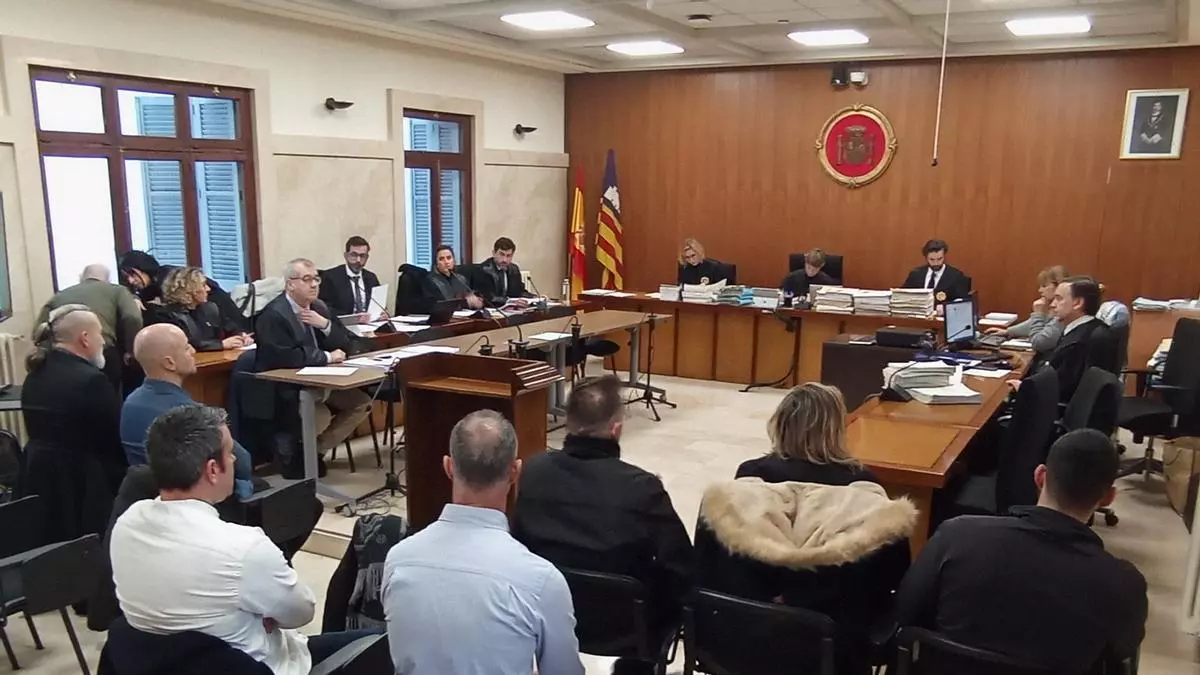
The High Court of Justice of the Balearic Islands (TSJB) has upheld a nine-and-a-half-year prison sentence against a man identified as a key figure in an international drug trafficking network that operated between Ibiza, Barcelona, and Miami. The ruling confirms an earlier decision issued by the Provincial Court, maintaining convictions for drug trafficking, membership in a criminal organization, and electricity fraud.
According to the court, the 54-year-old Argentine national served as a trusted associate of the alleged leader of the operation, providing critical logistical support from Barcelona. Investigators determined that he assisted drug couriers traveling to the United States, arranging accommodation, cash, luggage, and travel logistics, while also helping store and distribute illegal narcotics.
The court found that the criminal network operated between September 2019 and August 2020, moving significant quantities of MDMA, cocaine, ketamine, and cannabis across the Balearic Islands, particularly Ibiza and Mallorca. Part of the shipment was later transported to Miami by recruited couriers, who concealed the drugs in luggage and seemingly legitimate containers.
Operation Pertinax Leads to 21 Arrests
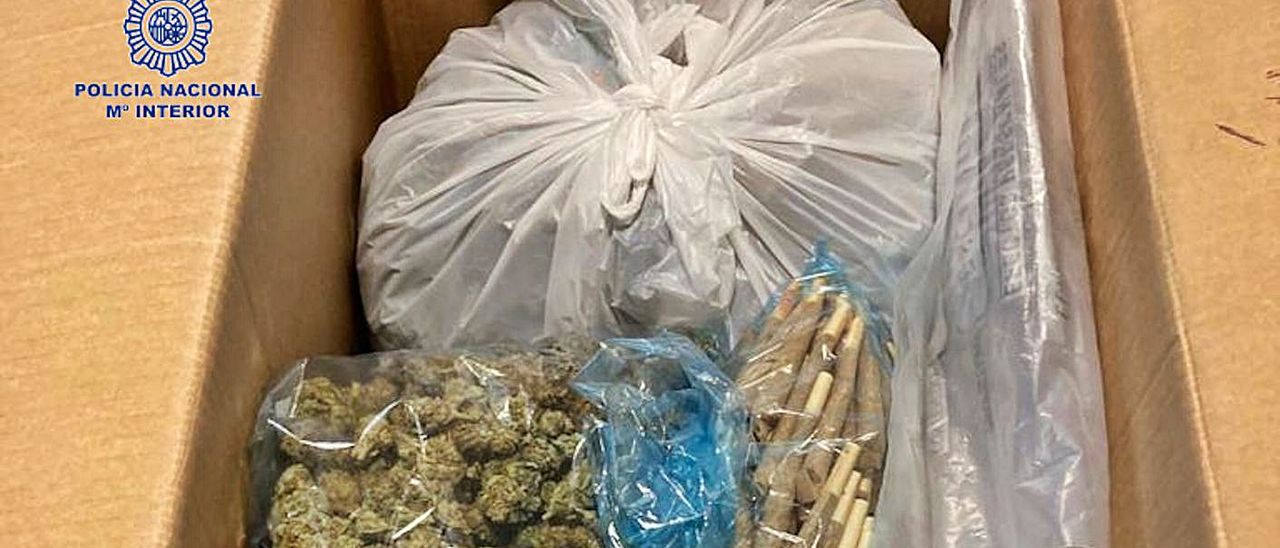
The case stems from a major Guardia Civil investigation known as Operation Pertinax, which culminated in August 2020 with the arrest of 21 suspects across Ibiza, Barcelona, and Girona. Authorities seized eight kilograms of synthetic drugs, including ketamine and ecstasy, along with 38 kilograms of marijuana and 4,500 cannabis plants.
The investigation began in October 2019 after authorities detected a criminal group operating from Mallorca and Ibiza that allegedly imported large quantities of drugs into the Balearic Islands before sending them to the United States using specially modified suitcases with hidden compartments.
The operation also involved agents from the U.S. Homeland Security Investigations (HSI). Thanks to this international cooperation, three individuals were arrested in Miami, where authorities seized 15 kilograms of MDMA pills and 14 kilograms of liquid ketamine. Additional arrests in Barcelona and Palma resulted in the seizure of more than 32 kilograms of ecstasy tablets.
Investigators identified DJ Hugo Bianco as the alleged mastermind behind the trafficking network. According to the investigation, Bianco used his extensive connections in Ibiza and Miami, where he regularly performed, to establish a drug transportation and distribution route between Spain and the United States.
Bianco is currently believed to be residing in Miami and has been declared a fugitive from justice, along with two other defendants who failed to comply with court summonses and remain absent from the legal proceedings.
Wiretapped Conversations Played Key Role
In its ruling, the TSJB rejected the defense’s arguments that the investigation violated the defendant’s right to privacy and the presumption of innocence. Judges ruled that the wiretapped phone conversations were lawfully obtained and formed part of a broader body of evidence described as “solid, coherent and convergent.”
The evidence included intercepted communications, trips to Miami, support provided to drug couriers, and evidence collected during property searches.
The court also dismissed claims that the defendant played only a minor role in the organization. Judges concluded that his involvement was “central” to the criminal enterprise, particularly regarding the logistics of drug shipments to the United States and the large-scale cultivation of cannabis.
During a search of his Barcelona residence, authorities discovered 97 cannabis plants, substantial quantities of dried marijuana, and equipment allegedly connected to the illegal operation.
In addition to the prison sentence, the court confirmed a €3 million fine and ordered the defendant, jointly with another convicted individual, to compensate the affected electricity company with €21,068. The ruling can still be appealed before the Spanish Supreme Court.