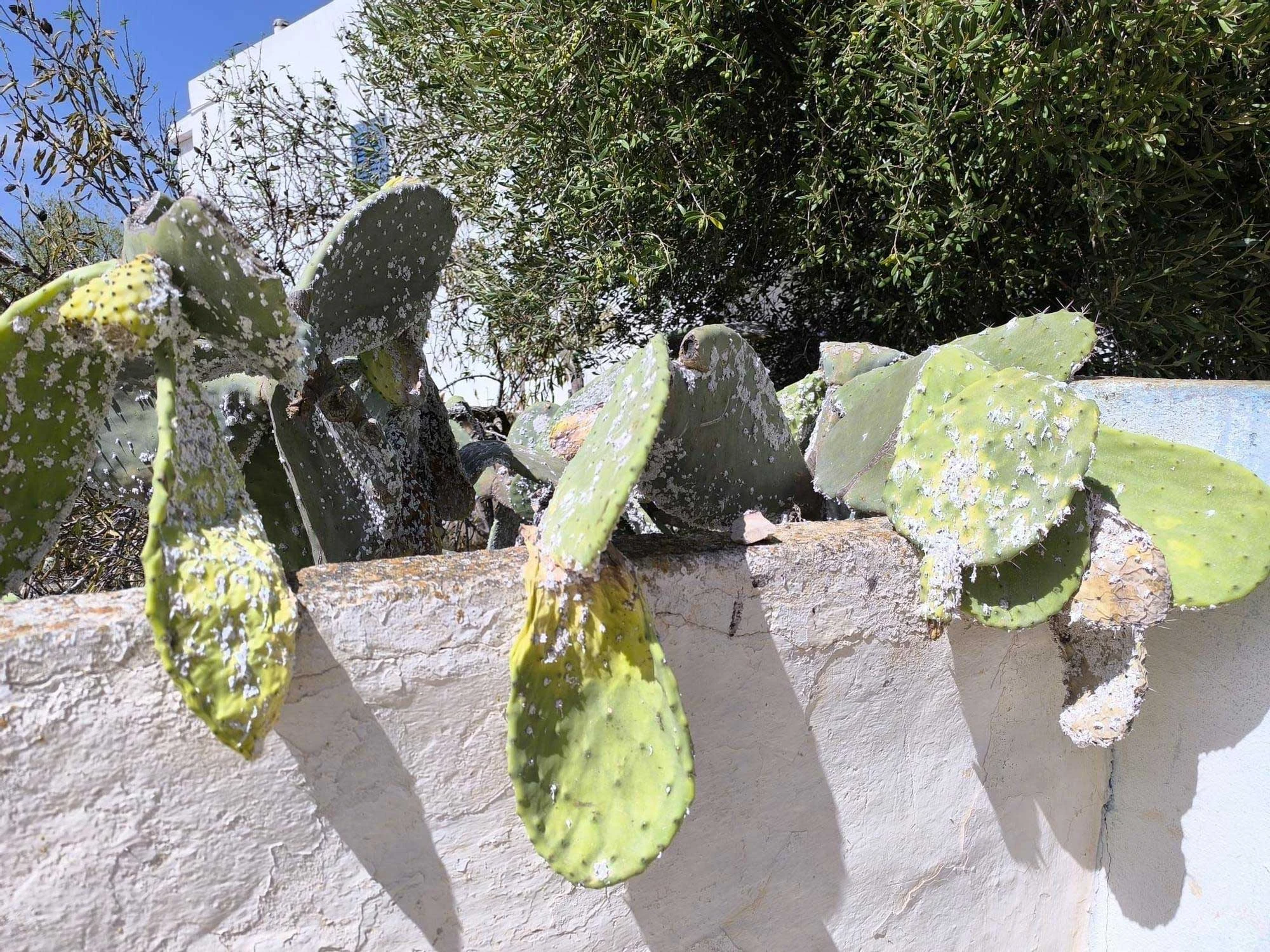
The pest has already caused severe damage in Ibiza and is increasingly weakening prickly pear cacti on the southern Pityusic island. Its classification as an invasive alien species prevents public authorities from taking action to preserve or reproduce these plants.
For several years, residents of Ibiza have been warning about the spread of the wild cochineal insect among the island’s prickly pear cacti. Until recently, the pest appeared to have spared Formentera, but the situation has now changed.
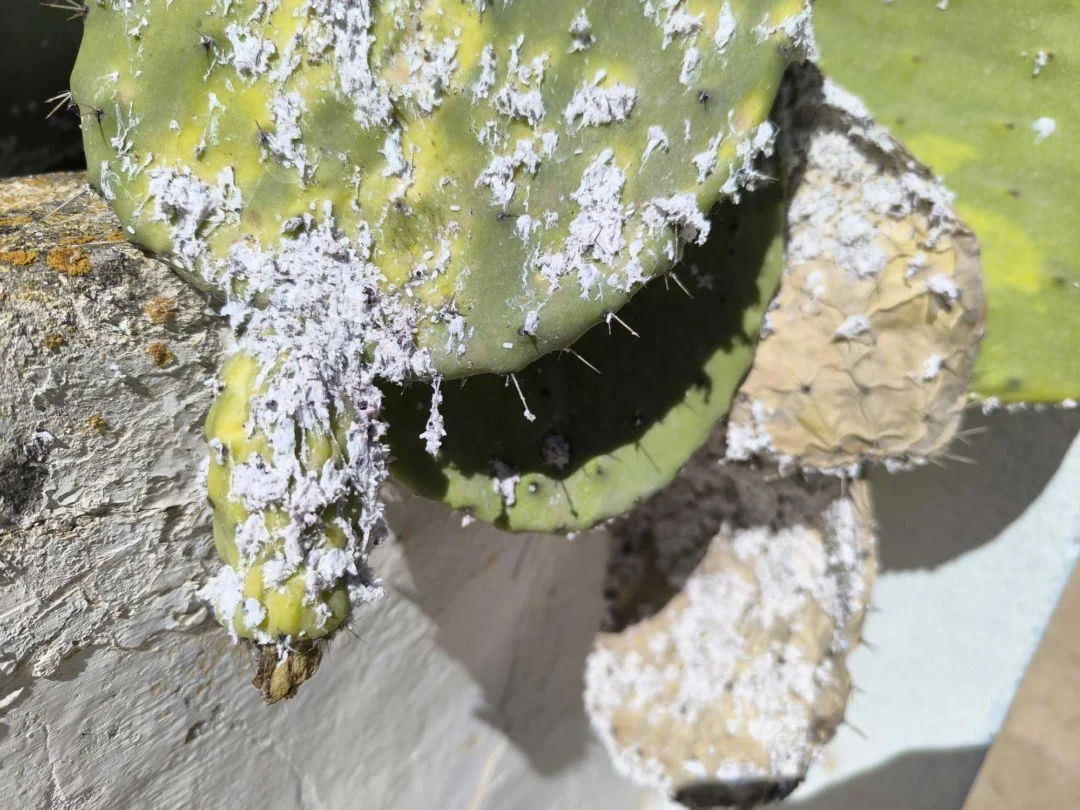
In recent months, it has become increasingly difficult to find a healthy prickly pear cactus — known locally as figuera de pic — that is not covered in the pest’s characteristic white patches. Many plants have damaged pads and are visibly weakened.
The culprit is Dactylopius opuntiae, commonly known as wild cochineal or carmine cochineal. Native to the Americas, the insect is an obligate parasite of plants belonging to the Opuntia genus.
It should not be confused with Dactylopius coccus, the cochineal species traditionally used to produce carmine dye.
The species now spreading across the Pityusic Islands is considerably more aggressive. Its nymphs can be easily dispersed by the wind, forming colonies on cactus pads that are covered by a distinctive white, waxy secretion.
The insects feed on the plant, causing chlorosis and necrosis, reducing its ability to photosynthesise and potentially killing the cactus.
The warning from the Canary Islands
The experience of the Canary Islands offers an indication of how destructive the pest can become.
The insect was first detected there in 2010 and was officially declared a pest in 2023. The regional government warns that a severe infestation can kill a prickly pear cactus in as little as one or two years.
The loss of these plants would mean more than a change to the landscape. Despite their American origins, prickly pear cacti have become deeply integrated into the rural landscape of the Pityusic Islands.
They have grown for generations alongside houses, paths and traditional animal enclosures. Their fruit — the prickly pear, known locally as figues de pic — has traditionally been eaten by people, while the pads have been used as feed for goats and sheep, particularly during the dry summer months when grass becomes scarce.
An invasive species that authorities cannot promote
The situation creates a particular paradox: the plant now being damaged by the pest is itself classified by the Spanish state as an invasive alien species, including in the Balearic Islands.
That classification prevents public administrations from promoting its reproduction or expansion.
Prickly pear cacti growing in private gardens can be maintained, provided they remain within defined areas and are prevented from spreading into the natural environment. However, public policy is focused on controlling the species rather than expanding it.
This legal and environmental framework helps explain the absence of a public campaign to save the island’s prickly pear cacti.
The Environment Department of the Formentera Island Council is clear about the situation.
“The truth is that it is a drama, but we are not doing anything specific. It is difficult to act against the cochineal, which is spreading and causing many plants to weaken,” the department explains.
Potassium soap or neem oil
With no public intervention currently planned, individual owners can try to contain the pest on their own prickly pear plants.
Formentera’s Environment Department recommends spraying the cactus pads with potassium soap or neem oil, products that act on the cochineal through direct contact.
The treatment needs to be repeated because the waxy secretion surrounding the insect acts as a protective layer, making it harder for the product to reach the pest.
The experience in the Canary Islands points to additional measures. The regional government recommends taking action as soon as the first colonies appear, using pressurised water, removing the most heavily affected pads and monitoring the plants for possible reinfestation.
Since 2026, the use of products containing 80% paraffin oil has also been authorised in the Canary Islands specifically against Dactylopius opuntiae.
Protecting affected plants safely
In all cases, affected plant material should not be abandoned on the ground, as this could contribute to further spread of the pest.
When commercial products are used, particular care is also required if the prickly pears are intended for human consumption or the cactus pads are to be used as livestock feed.
Owners should check that any product is authorised for the intended use and follow the manufacturer’s instructions carefully.
For Formentera, the spread of Dactylopius opuntiae represents a growing threat to a plant that, although originally from the Americas, has become a familiar and longstanding part of the island’s rural landscape and traditional way of life.