Es Canar remains a stronghold for family holidays
Ibiza’s transformation into an increasingly luxury-oriented tourist destination is putting pressure on one of the island’s traditional markets: family tourism.
Rising prices have made holidays significantly more expensive for families, as accommodation, restaurants and leisure activities all add to the cost of travelling with children. The result has been a sharp decline in the traditional family segment in some parts of the island.
The change is already being felt in destinations such as Portinatx. In Es Canar, however, the picture remains considerably more positive.
The Santa Eulària resort has managed to maintain a strong family tourism base, despite a relatively slow start to the season across Ibiza.
“The season is going well. Lots of people, lots of work,” says Olga de la Cruz, who works at Las Arenas café, just a few metres from the beach.
Her colleague, Céline Le François, believes the extreme heat experienced during the summer may even have helped some businesses. “People haven’t gone to the beach as much and have preferred to come here for a drink,” she explains.
The impact of the Football World Cup
Es Canar has long been associated with family-friendly tourism, and local businesses say that profile remains clearly visible.
“The area is geared towards family tourism, with children and couples. Every year it is always family tourism,” says De la Cruz.
Le François says she did not notice a dramatic fall in business at the beginning of the season despite international tensions and the Football World Cup, which affected travel patterns for some visitors.
The resort continues to attract a predominantly international clientele.
“Lots of Germans, French, English… all nationalities,” says De la Cruz.
Le François, however, believes that Spanish domestic tourism is gaining ground.
She is also optimistic about the future of tourism in Santa Eulària, pointing to the municipality’s investment in concerts and cultural activities designed to encourage visitors to stay locally rather than travelling into Ibiza Town.
A quieter side of Ibiza
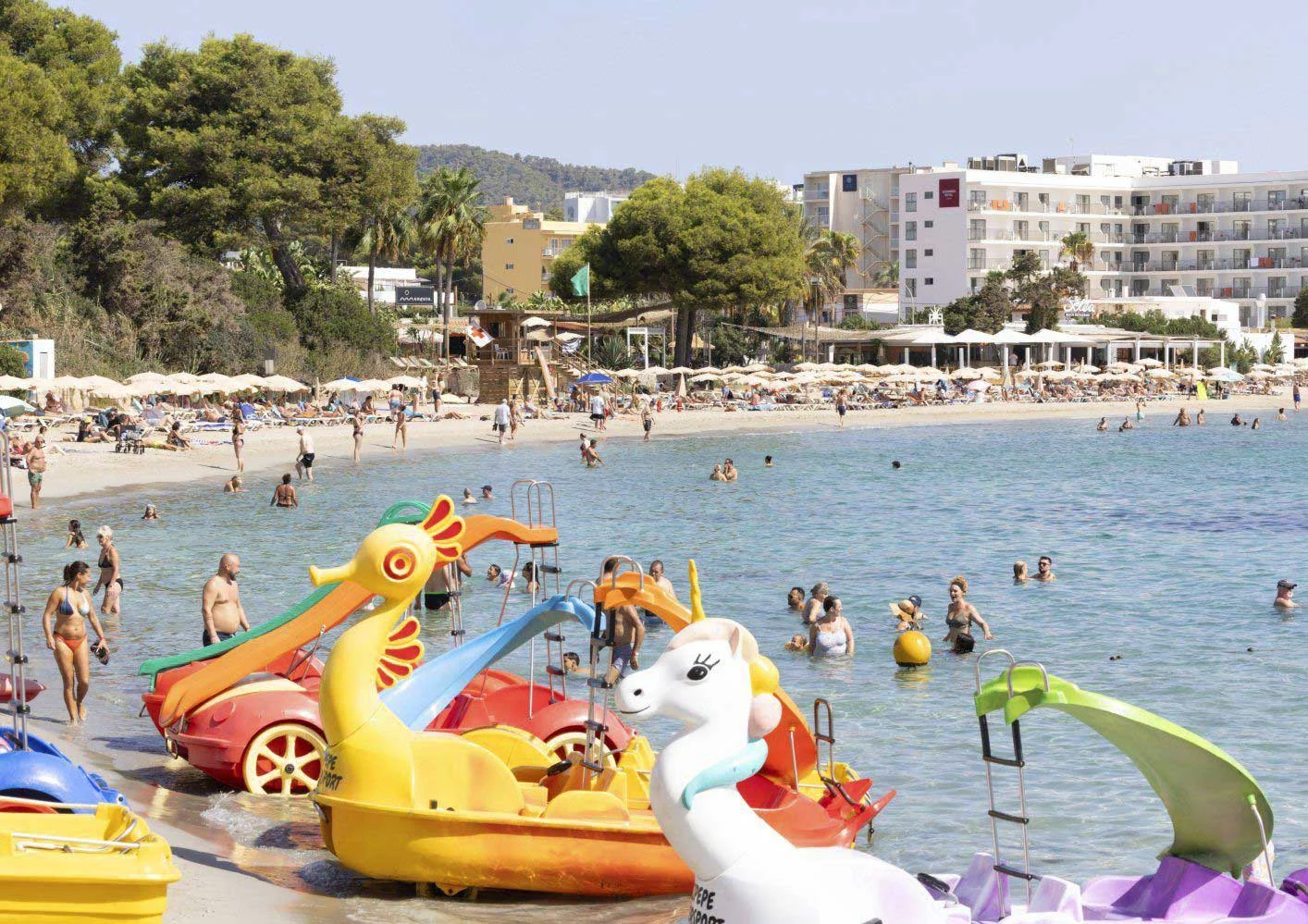
The family character of Es Canar is particularly evident along its seafront.
On the jetty overlooking the beach, a family fishes peacefully. Nearby, a mother and her two daughters watch swimmers from the promenade, while tourists stroll beneath the September sun and others swim in the turquoise waters.
The atmosphere is noticeably different from Ibiza’s better-known party destinations. Here, family holidays, beach time, walks and terraces take centre stage.
“Es Canar has always been a family tourism destination. We appreciate that, and I think we should continue in this direction,” says Lázaro Muñoz, owner of Restaurante Miranda.
Muñoz acknowledges that the Football World Cup had a negative impact on the start of the season. Even after the tournament ended, however, business did not recover as strongly as expected.
“There are still the final weeks, and we normally do well in September. But overall, this season is weaker than last year,” he says.
Why September could bring a late boost
Despite the weaker season, local businesses are hoping that September will provide a final boost.
Muñoz points out that the type of visitor arriving towards the end of summer can be particularly valuable for local businesses. With accommodation prices falling after the peak season, tourists may have more money available to spend on restaurants and other activities.
“The customer who comes has more purchasing power, accommodation is cheaper and they have more money for complementary services, such as restaurants,” he explains.
For Es Canar’s businesses, this late-season spending could help offset some of the weaker months.
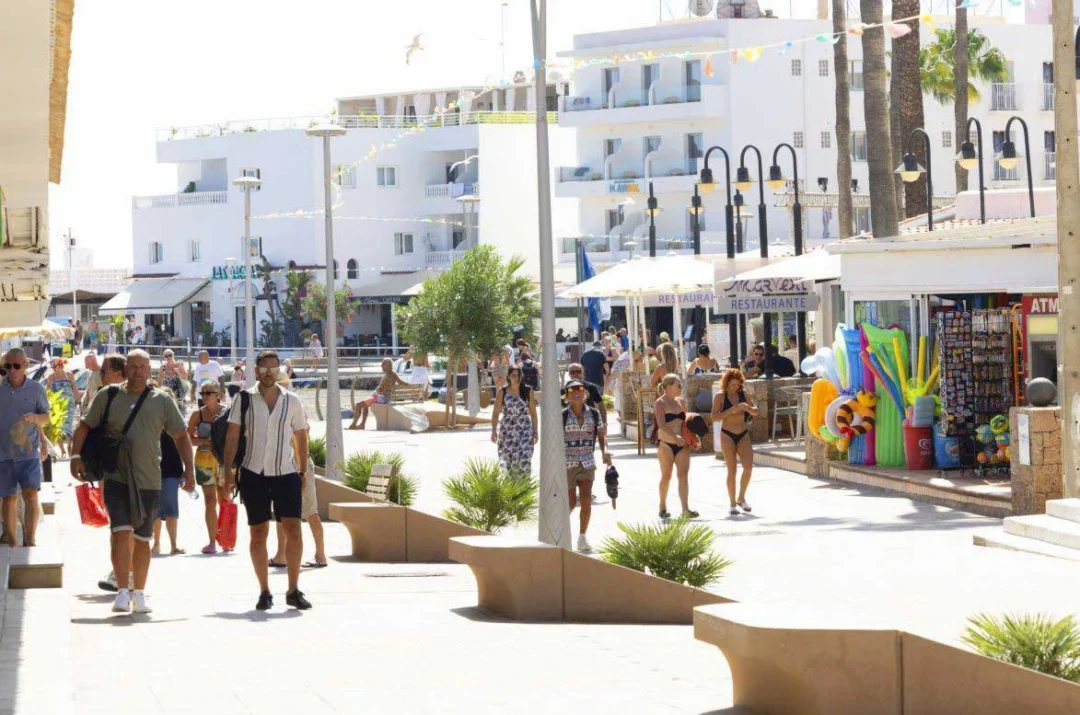
Luxury tourism is beginning to reshape Es Canar
The shift towards higher-spending visitors is also reflected in local retail.
Juan Luis Reyes, from the Eroski supermarket, confirms a trend reported by other businesses across Ibiza: fewer tourists, but higher spending per visitor.
“Sales are more or less the same. But we have noticed a fall in the number of tourists,” he says.
Higher prices have helped maintain overall turnover, meaning that the final figures are broadly similar to last year despite fewer visitors.
Reyes also believes the Football World Cup influenced the season. “People go to the United States, where it was held, and then they normally come here,” he says.
He expects the end of the season to deliver around two strong weeks of revenue, but does not anticipate a major increase beyond that.
Overall, he describes the season as “a good season, although not as good as others”.
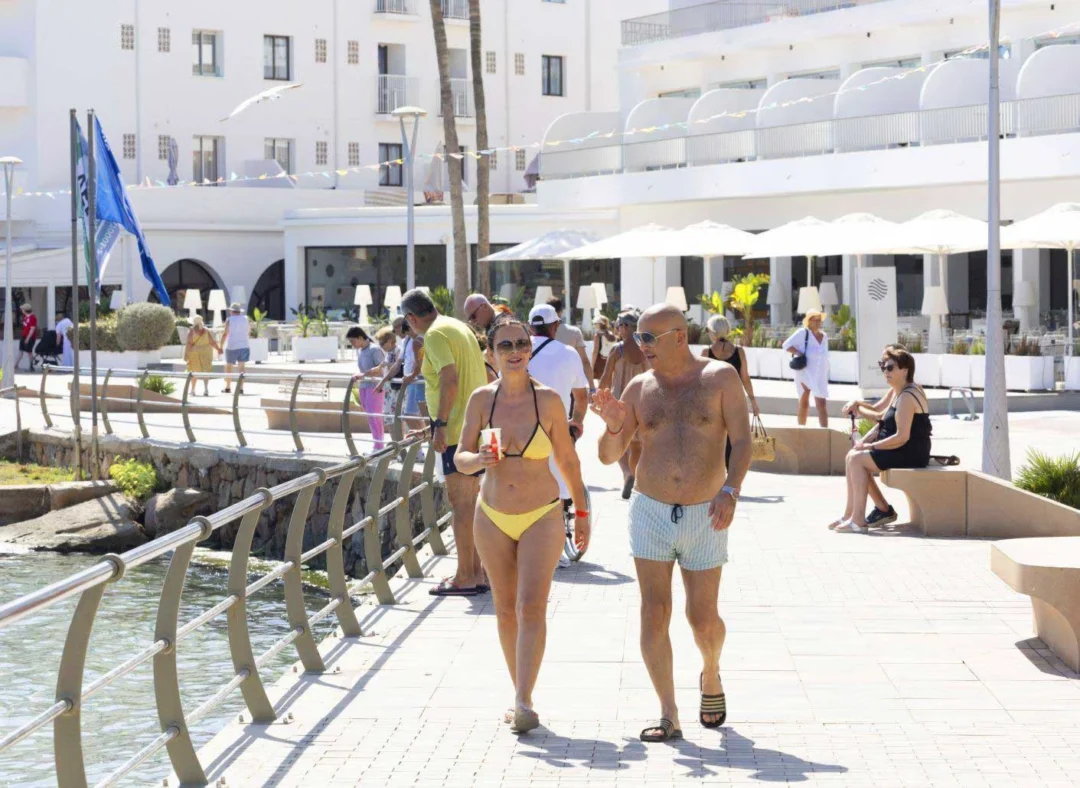
Is Es Canar becoming a luxury destination?
For Reyes, the biggest question is what happens next.
Es Canar remains strongly associated with family tourism, but he believes the area is gradually being repositioned towards visitors with greater spending power and a more sophisticated, “chillout” atmosphere.
“They are changing it lately,” he says, warning that this transformation could eventually undermine the traditional family market that has long defined the resort.
The paradox is already becoming visible: there may be fewer visitors, but each visitor is spending more.
That can help businesses maintain their revenues, but it also raises a bigger question about the future identity of Es Canar: will the resort continue to be one of Ibiza’s family-friendly destinations, or will rising prices gradually change the type of visitor it attracts?
For the local businesses interviewed, the answer remains clear for now. Family tourism is still the backbone of Es Canar’s economy.
A tourism crossroads for Santa Eulària
Looking ahead to next year, local businesses in this part of Santa Eulària are cautiously optimistic and believe the season could be stronger than the current one.
The planned development of a new five-star hotel in Cala Martina has not gone unnoticed.
Es Canar may therefore become an important case study for Ibiza: a destination where the strengths of its traditional family tourism model will increasingly be tested against the island’s broader shift towards high-end and luxury tourism.
The challenge will be finding out whether both models can coexist — or whether the transformation of Ibiza’s tourism industry eventually changes Es Canar beyond recognition.