
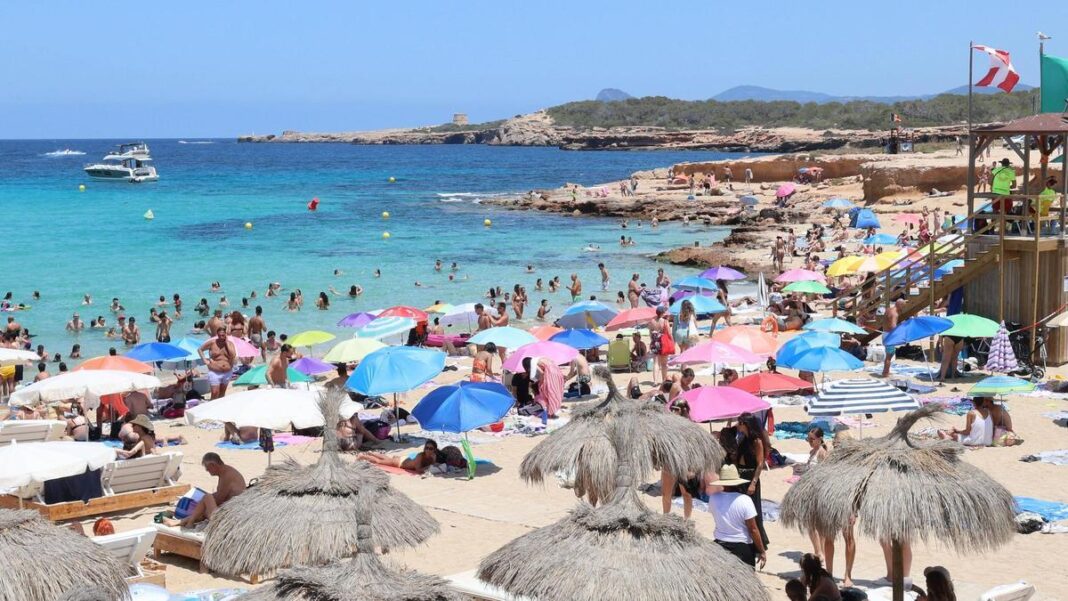
Up to November, a total of 3,698,924 tourists arrived in the Pitiusas, around 15,000 more than in the same period last year, an increase of just 0.4%. This confirms a stabilisation in visitor numbers following the peak reached in 2023, when arrivals stood at 3.71 million. However, tourist behaviour by nationality shows significant variations, according to the latest statistics published by Ibestat.
A total of 833,321 Spanish tourists visited the islands up to November, 110,550 fewer than in the whole of 2024. Although this remains the largest source market, it marks the second decline since the 2023 record of 966,287 visitors. The Spanish market is now approaching the figures for the United Kingdom, which this year brought 827,201 tourists — just 642 more than in 2024, an increase of only 0.07%. It is worth noting that before the Covid pandemic, around 90,000 more British tourists travelled to Ibiza, a key market given their significantly higher average tourist spending compared to domestic visitors.
Fewer Germans
Germany, with 287,052 tourists, recorded a drop of 2.8% compared to the previous year and almost 33,000 fewer visitors than in 2022. This represents the third consecutive annual decline for this market. The Benelux countries — which Frontur groups together under Belgium, the Netherlands and Luxembourg — accounted for 375,266 tourists, 31,533 fewer than in 2024, a decrease of 7.7%. This downturn is particularly concerning due to the high purchasing power of these visitors and because it is the second year in a row that this decline has occurred.
In contrast, Italy continues to grow as a source market, with 479,598 tourists travelling to Ibiza, almost 50,000 more than in 2024, an increase of 11.6%. The number of French visitors also rose, reaching 240,183 — around 18,000 more than the previous year (8.28%) — marking the best figure for this nationality in the past decade. Meanwhile, although their overall numbers remain relatively modest, the Nordic countries showed notable growth: 31,367 tourists travelled to Ibiza, a 29% increase compared to the previous season, according to Frontur data, which groups these countries into a single category.
For the full article, please visit Diario de Ibiza website here.