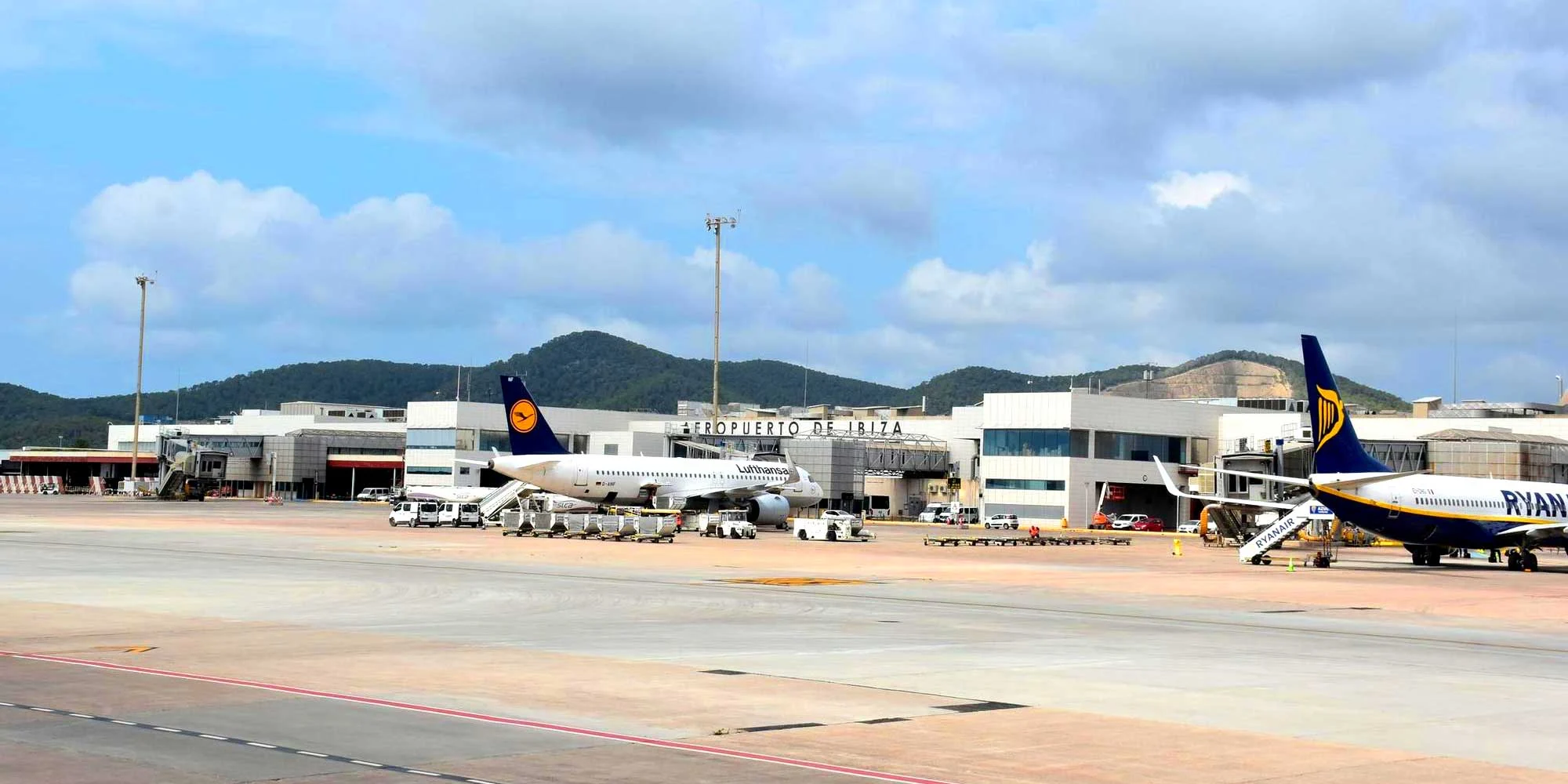
Despite strong tourism demand and optimistic forecasts for the summer season, Ibiza Airport is set to experience a notable decline in air traffic during the transition from June to July, one of the busiest periods of the year for the island’s tourism industry.
According to figures provided by Aena, the operator of Spain’s airport network, Ibiza will be the most affected airport in the Balearic Islands in terms of reduced flight activity. The decrease comes during the opening weeks of the summer holiday season, traditionally a key period for international arrivals and tourism-related travel.
Nearly 500 Fewer Flights Scheduled at Ibiza Airport
Between the final weekend of June and the first week of July, 3,886 flights are scheduled to operate at Ibiza Airport, including both arrivals and departures.
This represents a reduction of almost 490 flights compared to the same period in 2025, making Ibiza the Balearic airport with the largest year-on-year decline in operations.
The figures are particularly striking given that tourism indicators earlier in June pointed to increasing visitor demand and higher projected load factors on flights serving the island.
Air Traffic Declines Across the Balearic Islands
The reduction is part of a broader trend affecting the Balearic Islands’ airport network.
Overall, the three airports serving the archipelago are expected to handle 15,664 flight operations during the period, approximately 560 fewer flights than last year, representing a decline of around 3.5%.
While Ibiza records the sharpest drop, the figures suggest a slight slowdown in air traffic growth across the region at the start of the peak summer season.

What the Numbers Mean for Ibiza Tourism
Although the decline in scheduled flights may appear significant, Ibiza remains one of the Mediterranean’s most important leisure destinations, attracting millions of visitors every year through a combination of beach tourism, luxury hospitality, nightlife, wellness travel, and cultural experiences.
Industry observers will be closely monitoring passenger volumes throughout July and August to determine whether the reduction in flight operations reflects changes in airline scheduling, capacity adjustments, or broader shifts in travel demand.
For now, the latest data highlights an unexpected development at a time when Ibiza’s tourism sector had anticipated a strong start to the summer season, supported by positive booking trends and continued international interest in the island.
As the summer progresses, airlines, tourism businesses, and local authorities will be watching closely to see whether the decline in flight operations translates into lower visitor numbers or simply reflects operational adjustments within the aviation sector.