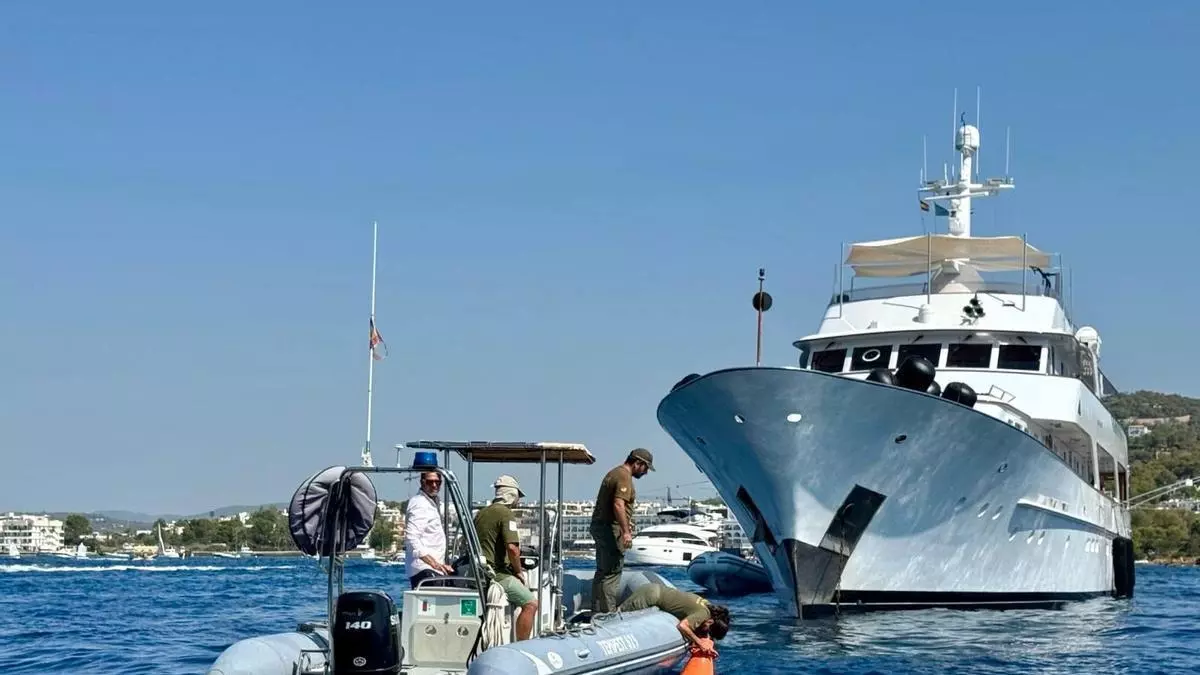
The Balearic Government has launched a new season of its Posidonia Surveillance Service, a key environmental initiative designed to prevent boats from anchoring on protected Posidonia oceanica seagrass meadows and safeguard one of the Mediterranean’s most valuable marine ecosystems. This summer, a fleet of nine patrol vessels will operate across Ibiza and Formentera, with five units assigned to Formentera and four to Ibiza.
The surveillance program has been active since June 1 and will remain in operation until October 10, covering the peak Mediterranean boating season. Across the Balearic Islands, the service deploys a total of 20 monitoring vessels, managed by the Balearic Nature Institute (IBANAT) under the regional Ministry of Agriculture, Fisheries and Natural Environment. The network also includes six vessels in Mallorca and five in Menorca.
The Balearic Islands are home to approximately 650 square kilometres of Posidonia seagrass meadows, representing nearly half of Spain’s total coverage of this protected marine plant. Recognised by the European Union as a priority habitat, Posidonia plays a critical role in maintaining the health of the Mediterranean Sea, contributing to oxygen production, blue carbon capture, improved water quality, and coastal protection against erosion.
According to regional authorities, the surveillance service operates through a coordinated effort involving island councils, natural parks, marine reserves, environmental officers, the Spanish Civil Guard, and other public agencies responsible for coastal protection. Beyond monitoring anchoring activity, patrol teams also conduct environmental monitoring, seabird surveys, marine wildlife assistance, and educational outreach aimed at both the boating sector and the wider public.
To improve efficiency, the Balearic Government has introduced advanced technological tools, including an AIS tracking system developed in collaboration with the Balearic Islands Coastal Observing and Forecasting System (SOCIB). The technology allows authorities to optimise patrol routes, identify risk situations more quickly, and enhance protection of sensitive marine habitats. New digital mapping applications have also been introduced to help sailors locate areas where anchoring is permitted without harming the seabed.
Education and Prevention at the Core of the Strategy
Anna Torres, Director General of Natural Environment and Forestry Management, emphasized that the primary objective of the service is to inform, assist and raise awareness among boaters, helping them avoid damaging Posidonia meadows. Prevention remains especially important during the summer months, when Ibiza and Formentera experience some of the highest levels of recreational boating traffic in the Mediterranean.
The initiative recorded a significant milestone in 2025, closing the season with 181,468 interventions, representing a 40% increase compared to the previous year. Despite the rise in activity, the percentage of illegal anchoring incidents fell to 6.4%, the lowest figure since the surveillance program was established.
Among the islands, Formentera continues to register the fewest incidents, while areas of Ibiza experiencing the greatest boating pressure include Sant Antoni Bay, Porroig, and Talamanca. Similar high-demand coastal zones have also been identified in Mallorca, particularly in Calvià, Andratx, and Alcanada.
As sustainable tourism and marine conservation become increasingly important across the Mediterranean, the Balearic Islands continue to position themselves as a benchmark for the protection of Posidonia seagrass ecosystems, one of the region’s most valuable natural assets.