Citizen involvement proposed as a necessary alternative amid bureaucratic delays and the growing ecological threat
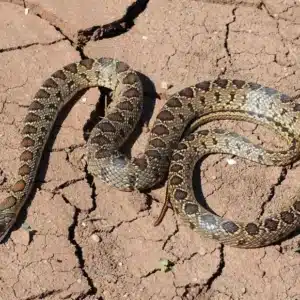
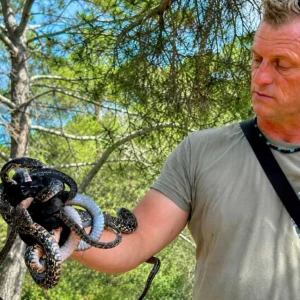
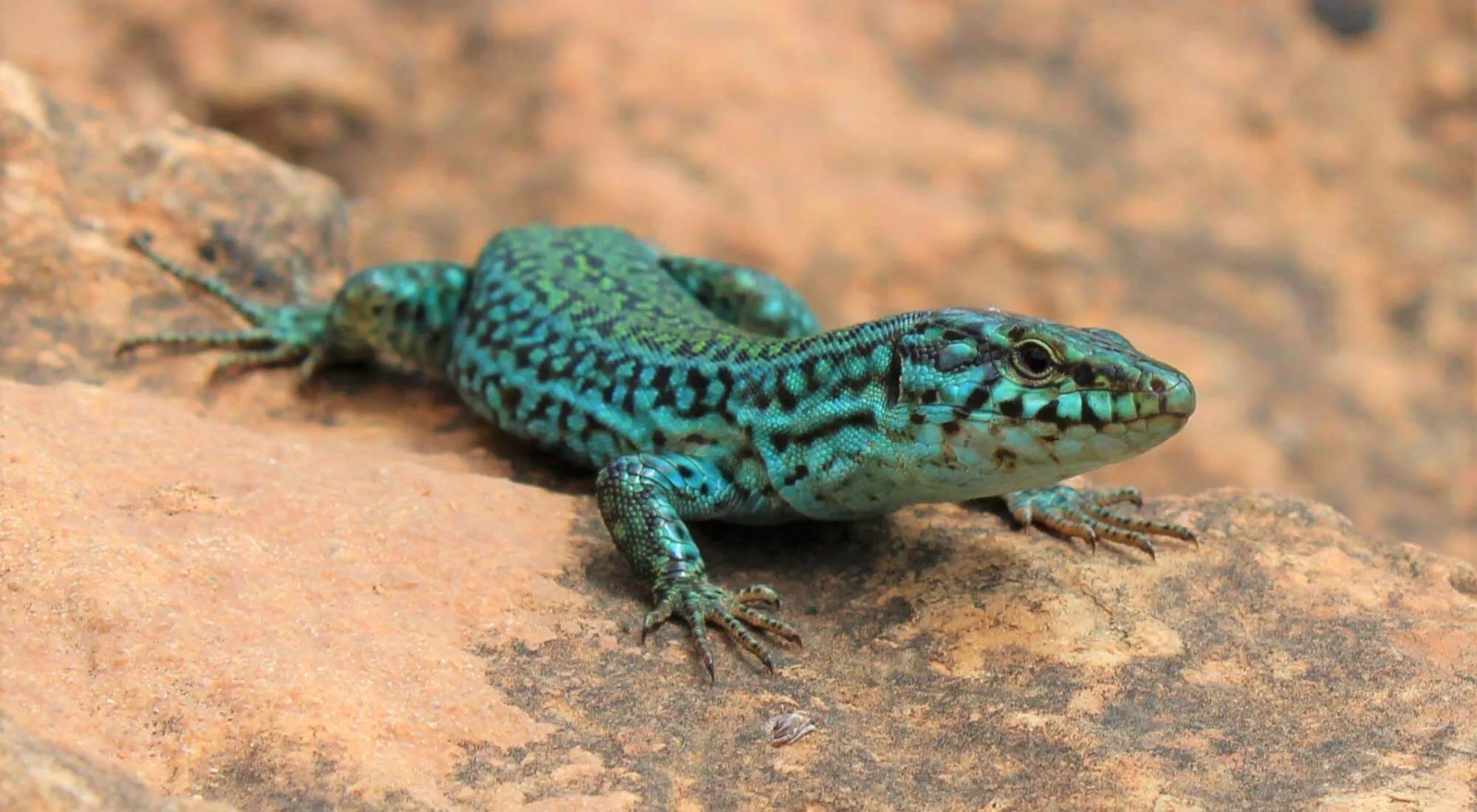
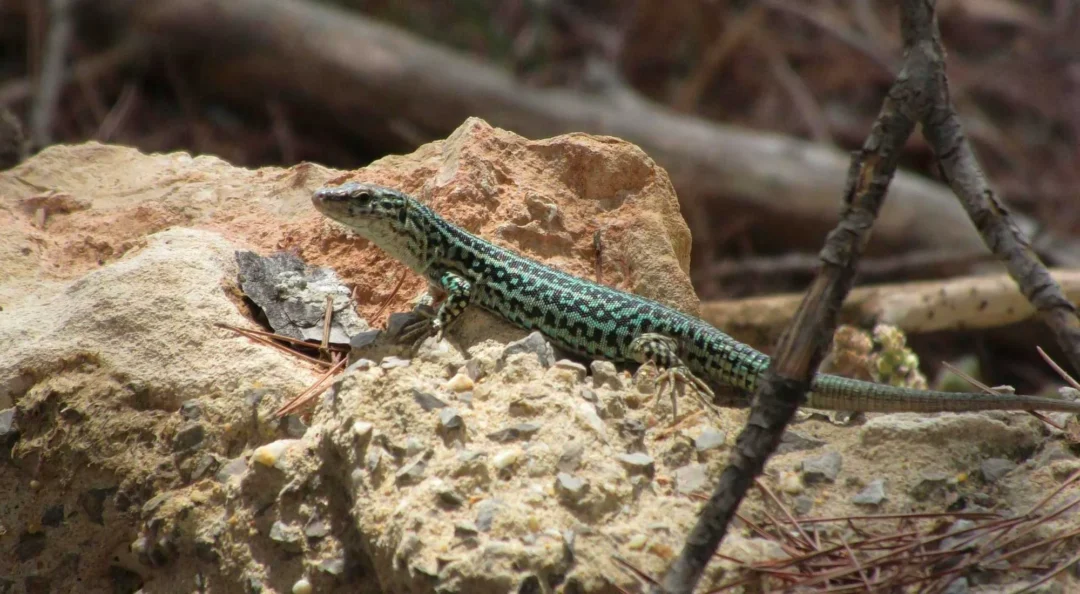
The sighting and subsequent capture of a horseshoe whip snake (Hemorrhois hippocrepis) a few days ago at s’Estany des Peix in Formentera has brought a long-standing environmental concern back into the spotlight: the future of the Ibiza wall lizard (Podarcis pityusensis) is increasingly at risk.
For years, biologists, environmental organisations and citizen groups have been warning about the seriousness of the situation and calling for urgent action beyond the measures currently adopted by the Balearic Islands Government. Because the Ibiza wall lizard is officially classified as “vulnerable” under the Balearic Catalogue of Threatened Species, any intervention that could affect the species must be authorised by the competent authorities, which are also responsible for approving and implementing its conservation plan.
Sargantana Power, one of the citizen platforms campaigning on the issue, has been denouncing what it describes as institutional “inaction” since last summer. The group also questions whether the current strategy against invasive snakes relies too heavily on trapping operations carried out by Cofib, the public body attached to the Balearic Government’s Department of Agriculture, Fisheries and the Natural Environment.
“This is an unprecedented ecological catastrophe. From the administration, we hear announcements, plans, millions in investment and projects, but nothing is actually happening on the ground,” says Marilina Serra, spokesperson for the group.
Serra warns that Formentera could follow the same path as Ibiza if action is not stepped up.
“If they don’t act quickly in Formentera, what has already happened in Ibiza will happen here. The horseshoe whip snake has already colonised the entire island,” she warns.
Horseshoe whip snakes pose the greatest threat to Formentera’s lizards
The horseshoe whip snake is considered the main threat to the Ibiza wall lizard, although the ladder snake (Zamenis scalaris) also preys on the species.
According to data published by the Centre for Ecological Research and Forestry Applications (CREAF), the invasion of horseshoe whip snakes in Ibiza began around 20 years ago. During the initial stages, the species remained restricted to relatively small areas. However, between 2010 and 2015, its expansion accelerated dramatically.
Researchers estimate that the snake occupied less than 5% of Ibiza in 2010, around 40% in 2016, and more than 90% by 2025.
CREAF researchers have warned that once the horseshoe whip snake reaches a new area, it can cause the local lizard population to disappear in less than three years.
Ladder snakes dominate in Formentera—for now
The situation in Formentera is currently different. The island’s predominant invasive snake is the ladder snake, whose impact on the lizard population is considered less severe, while horseshoe whip snake captures remain relatively rare.
In 2025, 886 ladder snakes were captured in Formentera, compared with just seven horseshoe whip snakes. In Ibiza, by contrast, authorities recorded 3,528 horseshoe whip snake captures during the same period.
For conservationists, preventing the horseshoe whip snake from becoming established and spreading across Formentera is therefore a critical priority for protecting the island’s remaining lizard populations.
Serra nevertheless stresses the reproductive advantage enjoyed by the snakes.
“We must not forget that horseshoe whip snakes can lay up to 14 eggs, while lizards lay only two to four eggs per clutch,” she explains.
The recent discovery of a horseshoe whip snake at s’Estany des Peix has therefore heightened concerns within Sargantana Power, which describes the finding as “very serious.”
“The administration is not doing what it should be doing,” Serra says.
She also criticises what she sees as a fundamental misunderstanding of the relationship between humans and nature.
“Politicians don’t realise that nature doesn’t need human beings, but we need nature,” she insists.
A citizen protocol to protect lizards
One of the main points of disagreement between citizen groups and official bodies is the limited role currently given to local residents in protecting the Ibiza wall lizard.
Biologist Antònia Maria Cirer shares Sargantana Power’s concerns and argues that, particularly in Formentera, trapping snakes alone is not enough.
She advocates using the collaboration of landowners and volunteers to create lizard shelters and snake barriers on private properties and in gardens, provided that the work is carried out under a protocol supervised by the authorities.
“The reality of 2026 requires us to do more than simply capture snakes with traps,” Cirer has warned on several occasions and in different public forums, repeatedly calling for the creation of a “citizen protocol” as a complementary conservation tool.
The proposal, however, comes up against the official position of the Balearic Government.
Authorities insist on scientific supervision
Anna Torres, Director General for Natural Environment and Forest Management, has reiterated the administration’s position in public statements: any intervention involving a protected species must be carried out under technical and scientific supervision.
According to the official approach, this is necessary to minimise potential risks associated with handling animals and to prevent unintended consequences, including the loss of genetic diversity.
The government has not ruled out the possibility of establishing lizard shelters on private land, but insists that such initiatives must form part of official programmes and receive specialist supervision.
For Sargantana Power, however, the pace of the administrative process is incompatible with the urgency of the ecological situation.
“Lizards don’t have time for so much red tape,” Serra replies.
The activist argues that citizen participation is currently reduced almost entirely to setting traps.
“If citizens want to take part in their conservation, we’re not allowed to do anything beyond putting out snake traps. It’s prohibited.”
She also claims that the administration treats the platform “as if we were enemies” because of its criticism of situations such as abandoned snake traps containing mice that have reportedly died of thirst.
Sargantana Power calls for “real” conservation measures
Miguel Ferrer, one of the founders of Sargantana Power, also expresses his disbelief at what he considers a lack of “real” measures to protect the Ibiza wall lizard.
“In any other European Union country, a situation like this would already have caused a major public outcry,” he argues.
Ferrer also criticises what he describes as “so much public money thrown away for nothing.”
The Sargantana Power founder rejects suggestions that the platform is aligned with any particular political party or set of political interests.
“We are simply citizens who are fed up with seeing nothing being done,” he concludes.
For the citizen groups involved, the debate is no longer simply about how many snakes can be captured. The wider question is whether Formentera can act quickly enough to prevent the horseshoe whip snake from establishing itself on the island—and whether local residents can be given a more active role in protecting one of the Pityusic Islands’ most emblematic species.