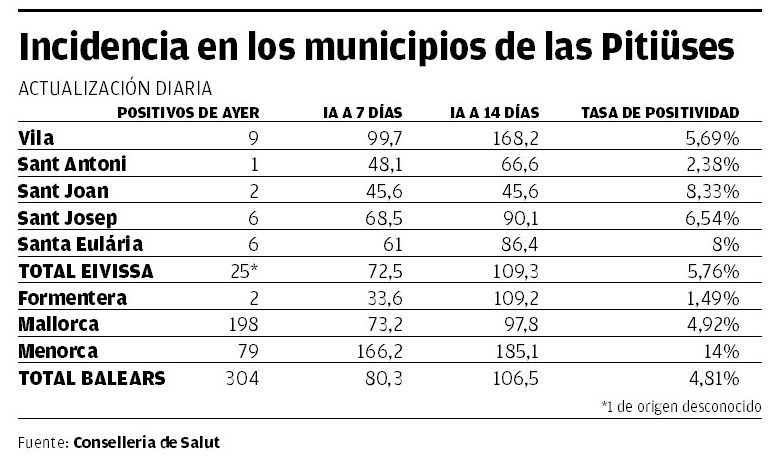
On an island like Ibiza, surrounded by the Mediterranean and closely associated with summer holidays, it is easy to see paddleboarding as a simple and relatively low-risk water activity: grab a board, paddle a few metres from shore, take a photo and head back to the beach.
But sea conditions can change quickly. A paddleboarding trip that starts with calm water can turn into a difficult situation if the wind strengthens, fatigue sets in or returning to shore becomes harder than expected.
The recent rescue of two women who were paddleboarding at Punta Galera in Sant Antoni highlighted precisely this risk. Both women were unharmed after being assisted by the Red Cross vessel LS Hidra, but the incident raises a question that not every paddler asks before entering the water: will the sea still be the same when it is time to return?
That is the concern raised by Abel Rodríguez, a Málaga-born industrial design and product development engineer and the creator of PaddleGo, a free app designed to help paddleboarders assess sea conditions.
After learning about the Punta Galera rescue, Rodríguez contacted Diario de Ibiza to discuss a pattern he says he has identified while tracking paddleboarding incidents across Spain this summer: the importance of wind conditions and how they evolve throughout the day.
PaddleGo was created to make sea conditions easier to understand
Rodríguez had been developing the idea for almost a year before using his paternity leave following the birth of his second daughter to turn it into a working app.
The concept came from a familiar problem. Whenever he and his friends wanted to go paddleboarding in Málaga, they would consult several weather apps, analyse information about wind, waves and swell, and still end up asking themselves the same question: “Is the sea good for paddleboarding today?”
His relationship with the sport began during the pandemic. Rodríguez bought his first board during lockdown and even inflated it in his living room while waiting for restrictions to ease and allow him to exercise outdoors.
Since then, paddleboarding has become a regular activity for Rodríguez and his family, including outings with his daughters.
Over time, however, he realised that deciding whether conditions were suitable was not always straightforward. Weather apps can provide plenty of data, but information such as wind speed in knots, wave periods and wind direction can be difficult for beginners to interpret.
“Most people find it very difficult to interpret that information. If you are new to the sport, you don’t really know what those figures mean or whether you can safely go out paddling,” he explains.
That gap in information led to PaddleGo, a free app that had reached 4,500 downloads just three weeks after launch, according to its creator.
The platform brings together weather and marine data and converts it into a simple visual indicator: a traffic-light system showing whether conditions are suitable for paddleboarding.
Green, yellow or red: PaddleGo’s safety system
PaddleGo uses three colours to provide an easy-to-understand assessment:
- Green: conditions are considered favourable for paddleboarding.
- Yellow: certain factors call for increased caution.
- Red: conditions suggest that the outing should be postponed.
The app uses weather and marine forecasts, paying particular attention to wind and wave conditions. Rodríguez says it analyses forecast models and, where available, also incorporates real-world measurements to cross-check the information.
Importantly, PaddleGo does not simply show what conditions are expected at the moment you launch. It also displays how those conditions are expected to develop over the following hours.
That feature addresses one of the most important risks for paddleboarders: a sea that looks safe when you leave may not be safe when you need to come back.
The PaddleGo website also provides wave and wind information, hourly forecasts, a search function for nearby beaches and a section designed to help users plan their paddleboarding trip and share their location.
7 safety tips for paddleboarding in Ibiza
1. Check how the wind will change—not just the conditions when you launch
According to Rodríguez, one of the most common mistakes is deciding whether to paddle based solely on what the sea looks like from the beach.
Wind conditions can be different further offshore and may increase while someone is out on the water. Before setting off, paddlers should therefore check the forecast for the entire duration of the trip, including the expected return time.
2. Be particularly careful with offshore winds
One of the biggest dangers is wind blowing from the land towards the open sea.
Such conditions can make it surprisingly easy to move away from the coastline. The problem comes when it is time to turn around.
“You move forward very easily without even noticing it, and then when you want to come back, that’s when you encounter the problem,” Rodríguez explains.
For inexperienced paddleboarders, offshore winds can quickly turn a recreational outing into an emergency.
3. Always wear your leash
The leash connecting the paddler to the board can be crucial if someone falls into the water.
In windy conditions, an unattended paddleboard can be blown away faster than a person can swim, leaving the paddler without the flotation device they may need to stay safe.
4. Tell someone before you go into the water
Rodríguez recommends telling someone you trust where you are launching from, your intended route and approximately how long you expect to be out on the water.
Having someone aware of your plans can make it easier to identify a delay and raise the alarm if something goes wrong.
5. Keep your location available in case of an emergency
PaddleGo includes a trip-planning feature that allows users to share their location via WhatsApp.
The app can also display the user’s exact coordinates and facilitate contact with 112 emergency services, which can be particularly useful if strong winds are moving a paddler away from their original position.
6. Check the forecast for the hours ahead
Although early mornings generally tend to have lighter winds and calmer seas, Rodríguez stresses that there is no universally “safe” time to paddle.
Conditions need to be checked every day and in relation to the planned return time, rather than relying on a general assumption about when the sea is usually calm.
7. Choose a board suitable for your experience and group
For beginners, Rodríguez recommends inflatable paddleboards, which are generally easier to transport, use and store.
However, anyone paddling with children or more than one person should make sure the board is appropriate for the group and respect its maximum capacity, dimensions and stability specifications.
Where to go paddleboarding in Ibiza
Ibiza offers numerous locations for paddleboarding, from S’Arenal de Sant Antoni and Cala Bassa to Platja d’en Bossa, Talamanca, Santa Eulària and Portinatx.
But, according to Rodríguez, choosing the right beach is only part of the equation.
The key to a safer paddleboarding experience in Ibiza is knowing not only where to go, but also when to go—and how the sea and wind are expected to change throughout the entire outing.
For anyone heading out on a paddleboard, the most important forecast may therefore not be the one showing the conditions when they leave the beach, but the one showing what the sea will look like when it is time to come home.