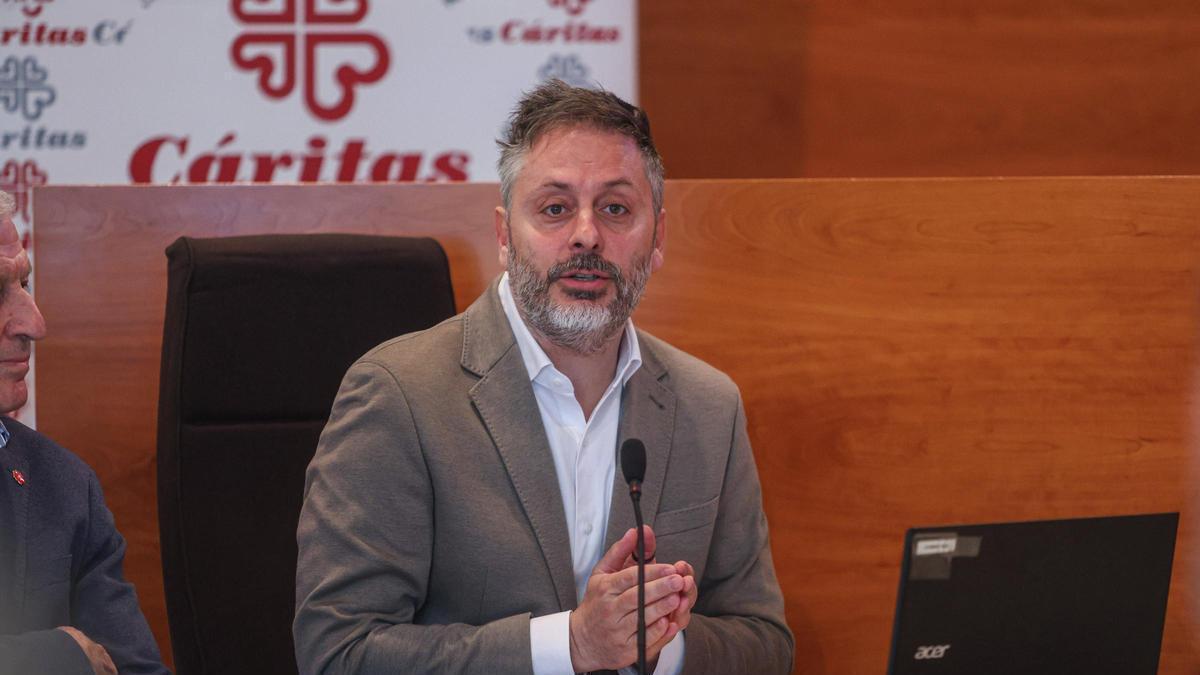
“Exclusion is not blind; it has very specific faces on the island”, warns Thomas Ubrich, a sociologist and member of FOESSA, who authored the Report on Exclusion and Social Development on the Island of Ibiza. “And the first of these faces is that of children. Social exclusion rises from 20.5% of the total population to 28.3% among those under the age of 18″, he explains.
That figure leads him to issue a stark warning: “We are mortgaging the future of almost one in every three children on the island”.
The second face is linked to origin. Being a foreign national “multiplies the risk”: 33% of the foreign population is affected by social exclusion, compared with 15.5% of people with Spanish nationality. “But I want to dispel a false myth”, says Ubrich, “one that this report clearly dismantles: exclusion is not a problem we have imported. The vast majority of people experiencing exclusion are Spanish. What we are seeing is not an issue inherent to people’s origin, but the result of structural barriers and failed policies”.
For the full article, please visit Diario de Ibiza website here.