
Sant Josep de sa Talaia has begun work this week to return Posidonia oceanica, a native Mediterranean seagrass, to the municipality’s beaches after it was removed at the start of the tourist season. The work will be carried out gradually, with two main aims: to recover any sand that may have been removed during beach-cleaning operations and to ensure the seagrass can continue to play its natural role in protecting the coastline from winter storms.
This year, the first areas to receive the seagrass will be beaches and sections of coastline with fewer visitors, as well as those where beach businesses and concession holders are already preparing to close for the season. The approach is designed to minimise disruption. According to the local council, the posidonia is always returned to the same beaches from which it was originally removed.
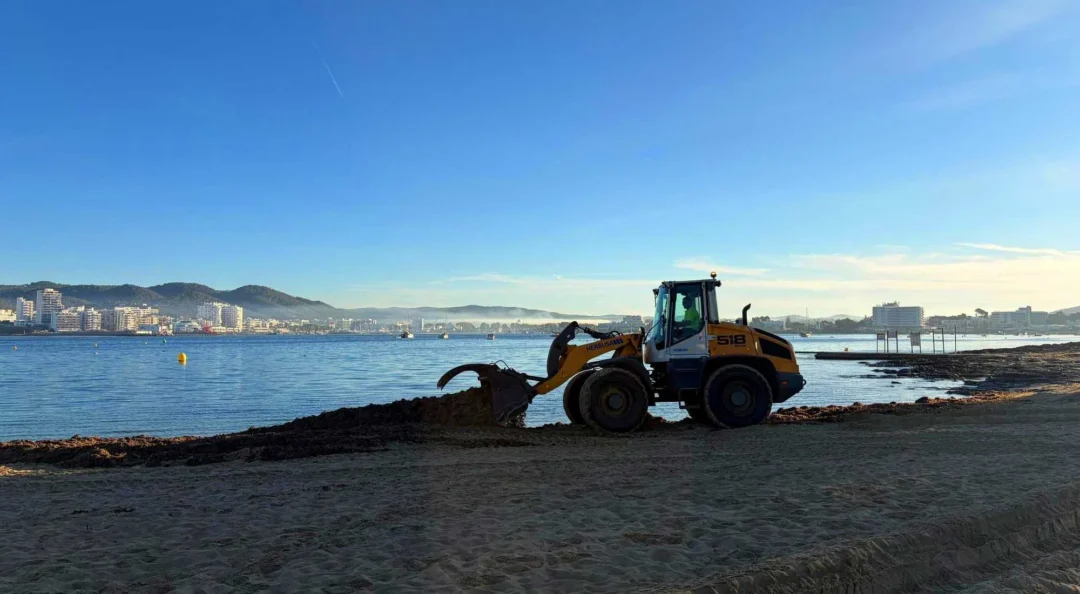
In the Bay of Portmany, the council has coordinated this year’s work with the local fishing sector to minimise any interference with moixó fishing, an activity carried out in shallow waters.
As a result, posidonia will not be returned to Port des Torrent or Punta Xinxó. In areas where the work can be carried out without interfering with fishing activities, the arrangements will be agreed with local fishermen.
At Punta Xinxó specifically, the posidonia removed from the beach will be handled differently. Rather than leaving it piled up along the shoreline, it will be mixed with the sand to allow the material to be returned while accommodating local fishing activities.
Posidonia plays a vital role in the formation and preservation of beaches. Its dead leaves accumulate along the shore, helping to absorb wave energy, retain sand and reduce coastal erosion during storms. Over time, this organic material breaks down and becomes part of the beach sediment itself.
The local council notes that posidonia management in the municipality follows Decree 25/2018 and the guidelines issued by the Balearic Islands government in its annual authorisations for the handling of this seagrass.


