
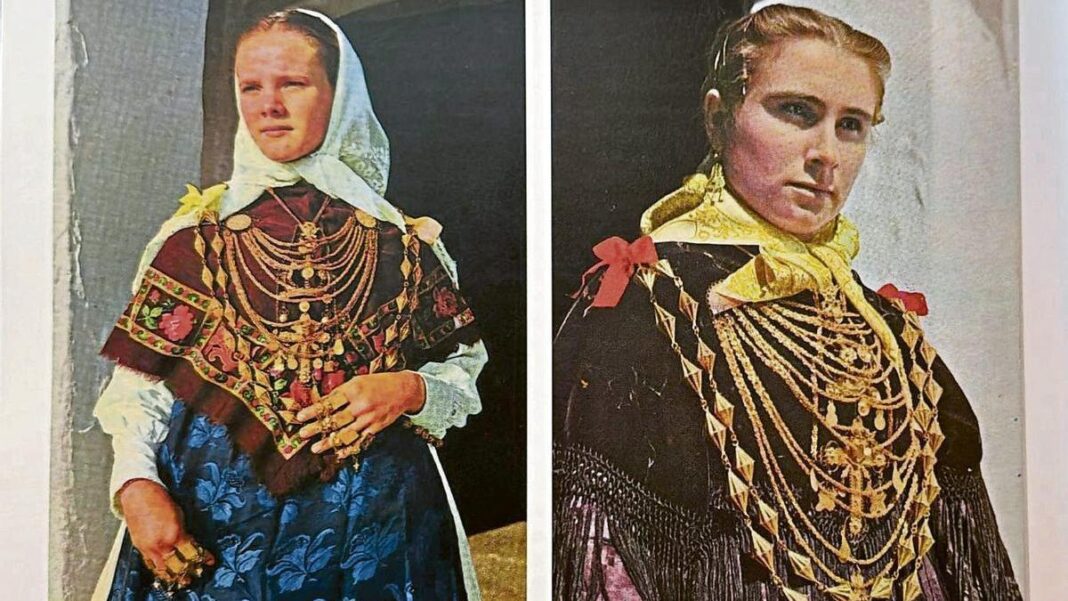
The delicacy involved in crafting a piece of jewelry endures over time through its transmission from one generation to the next. In Ibizan culture, this practice was so deeply rooted in the past that the gifting of an emprendada was considered to cover part — or even all — of a daughter’s inheritance. Among families with the economic means to own such pieces, there was always a jewel to pass on. For this reason, it was also common for them to be divided if there were not enough: chains were separated, or even the cross of a rosary was cut so that each person could keep a part of that precious asset.
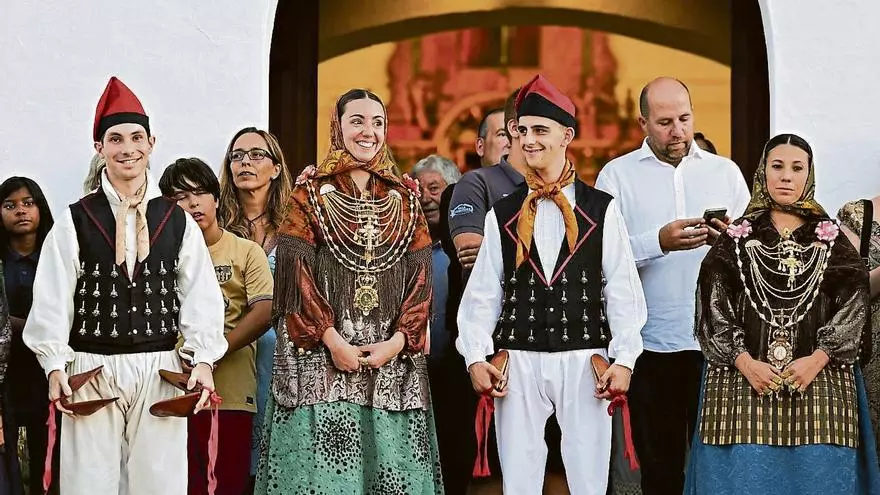
Alongside family inheritance, the colles de ball pagès played a fundamental role in spreading the use of Ibizan jewelry as it is known today. Pieces such as the emprendada, anells or botons returned to the public space thanks to the emergence of new folkloric groups in the late 1960s and early 1970s, explains historian Susana Cardona, author of the book Joies d’Ibiza. Història, tradició i identitat. This work was presented a few days ago as part of the exhibitions currently hosted by the Ethnographic Museum in Santa Eulària.
These groups emerged when “the organisations linked to the Falange disappeared, which led to the recovery of traditional jewelry as it has been preserved to this day”, Cardona says.
For the full article, please visit Diario de Ibiza website here.