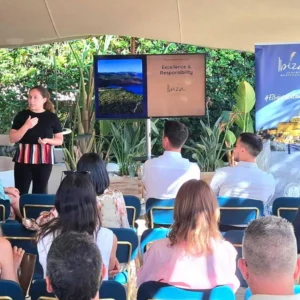
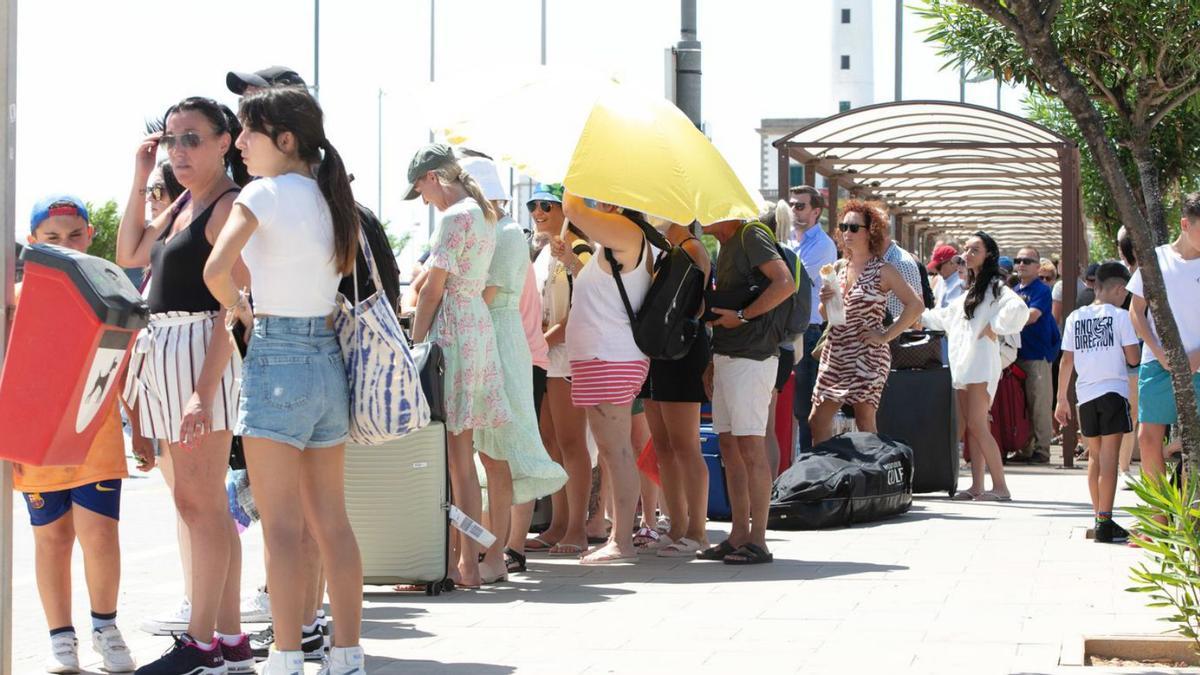
The rapid growth of luxury tourism in Ibiza, the rise in private jet flights and their impact on residents’ quality of life were at the centre of a speech by Socialist MP Àlex Pitaluga in the Balearic Parliament on Tuesday. Pitaluga, who is also the PSOE candidate for president of the Ibiza Island Council, called for a tax on private jets to reflect their environmental impact.
“This year, Ibiza has recorded 8,127 private flights up to August 2026 alone,” Pitaluga told the parliamentary session. He asked the Balearic Government whether it supported taxing these aircraft for the environmental damage they cause.
“We have included this tax in our programme and we will push for it,” he said. The Socialist MP also criticised the PP’s airport policy, pointing to its commitment to allowing airport capacity to grow in response to demand.
“You defend putting no limits on airports. Your election manifesto makes it very clear: the island airports will grow according to demand. Don’t try to mislead us,” he said.
Private jets can produce up to 14 times more emissions per passenger
Pitaluga highlighted the environmental impact of private aviation, citing studies which estimate that the sector produced at least 15.6 million tonnes of CO₂ worldwide in 2023, 46% more than in 2019.
“A private jet is estimated to emit between five and 14 times more CO₂ per passenger than a scheduled commercial flight,” he said.
The Socialist MP also warned about the effects of climate change on Ibiza’s marine environment and beaches, particularly rising sea temperatures and the impact on Posidonia seagrass, which plays a vital role in protecting the island’s coastline.
“This summer, climate change has been particularly intense. When the water stays too warm, torrential rainfall becomes more frequent and Posidonia mortality also increases. And if we lose Posidonia, we also lose the natural protection it provides for our beaches,” he warned.
Ibiza adds more than 1,500 five-star hotel rooms in two years
The expansion of luxury accommodation in Ibiza was another key issue raised by Pitaluga. According to figures from a report cited by the MP, the island went from 3,180 rooms in five-star hotels in 2023 to 4,734 in August 2025 — an increase of 1,554 rooms in just two years.
“You are promoting an unlimited luxury tourism model and fuelling its growth,” he said. Pitaluga also blamed the PP for the expansion of the luxury villa market, which he said had been encouraged, above all, by what he described as urban planning amnesties.
The PSOE candidate for president of the Ibiza Island Council acknowledged that “luxury tourism generates economic activity and can be positive”. However, he warned that when this model expands too far or becomes the dominant form of tourism, it “pushes up the cost of living and housing prices significantly”.
“How much of a hotel worker’s salary is left?”
Pitaluga questioned how much of the wealth generated by high-spending visitors actually benefits the wider population of Ibiza.
“It is good news for the person receiving the payment when a tourist spends much more. But I ask you: what does the vast majority of people in Ibiza get out of it? How much of a hotel worker’s salary is left after paying an exorbitant rent and sky-high grocery bills driven by this type of tourism?” he asked.
He also criticised the pressure that luxury tourism places on the island’s water resources. As an example, he referred to water consumption during a lavish party held in Sant Antoni.
“The water billed that night was equivalent to the amount used by 440 people from Ibiza in a single day,” he said.
“Without workers, water or Posidonia, there will be no tourism”
The Socialist MP called for a change in Ibiza’s tourism model, arguing that economic activity must be balanced with residents’ quality of life and the protection of the island’s natural resources.
“We need a model that genuinely makes tourism compatible with residents’ lives and our environment,” he said.
Pitaluga argued that this shift is also essential to secure the future of the tourism industry itself.
“It is also necessary for the tourism of the future, because without workers, water, reasonably pleasant temperatures or Posidonia, there will be no tourism,” he concluded.