Reducing the amount of food that ends up in the bin starts long before the cooking begins. Menu planning, proper food storage and making the most of surplus ingredients are among the practices explored this November by Ibiza & Formentera Preservation with hospitality students and professional chefs on the island.
The environmental foundation has dedicated its final two zero-waste cooking training sessions of the year to these groups, aiming to prevent food waste in hotels, restaurants and cafés. Both activities are part of the Zero Waste Gastronomy Activists project, run through the organisation’s Circular Economy programme.
Making the most of ingredients starts in the classroom
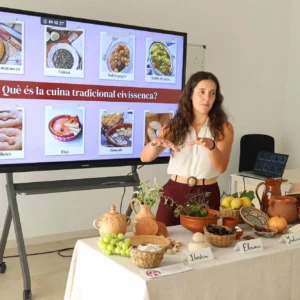
The latest session took place on Wednesday at Balàfia secondary school in Sant Llorenç, with 15 students enrolled in its Cooking and Restaurant Services course. Itziar Arratibel, the foundation’s Programme Director, led the theory session, while chef Erika Tangari oversaw the practical workshop.
Students learned food preservation techniques and different ways to use ingredients — including parts of foods that are routinely thrown away. The training also highlighted the importance of choosing local and seasonal produce.
“It is important that people training for a career in the kitchen learn from the outset how to make the most of food. It is not just about knowing recipes or preservation techniques, but about getting into the habit of thinking about what can be done with each product before throwing it away,” Arratibel explained.
Four fully booked courses for professional chefs
The other November training session brought together 12 working chefs for a free, four-day course, also led by Tangari. Participants explored food preservation, fermentation and the full use of ingredients, as well as different ways to extend the shelf life of food.
The course was organised with the support of theHUB and Crisp Catering & Events Ibiza. It was the fourth edition of the programme for professional chefs, and all four editions have been fully booked.
Jordi Salewski, the Circular Economy programme coordinator, believes the strong response reflects the hospitality sector’s growing interest in tackling food waste.
“With this training, we want to provide practical tools to prevent waste from being generated and also encourage the recycling of organic matter,” he said.
Bringing zero-waste habits into home kitchens
The foundation points out that food waste is an issue not only for the hospitality industry but also for households.
According to figures from the Spanish Ministry of Agriculture, Fisheries and Food’s 2025 Annual Report on Food Waste, cited by the organisation, an average of 24.3 kilos or litres of food and drink per person was wasted in Spain that year, both inside and outside the home.
Launched in 2024, the Zero Waste Gastronomy Activists project also includes workshops open to the public on fermentation, pickling and preserving food.
The initiative aims to bring practical food-saving techniques into both professional kitchens and everyday home cooking.