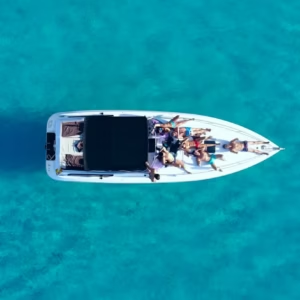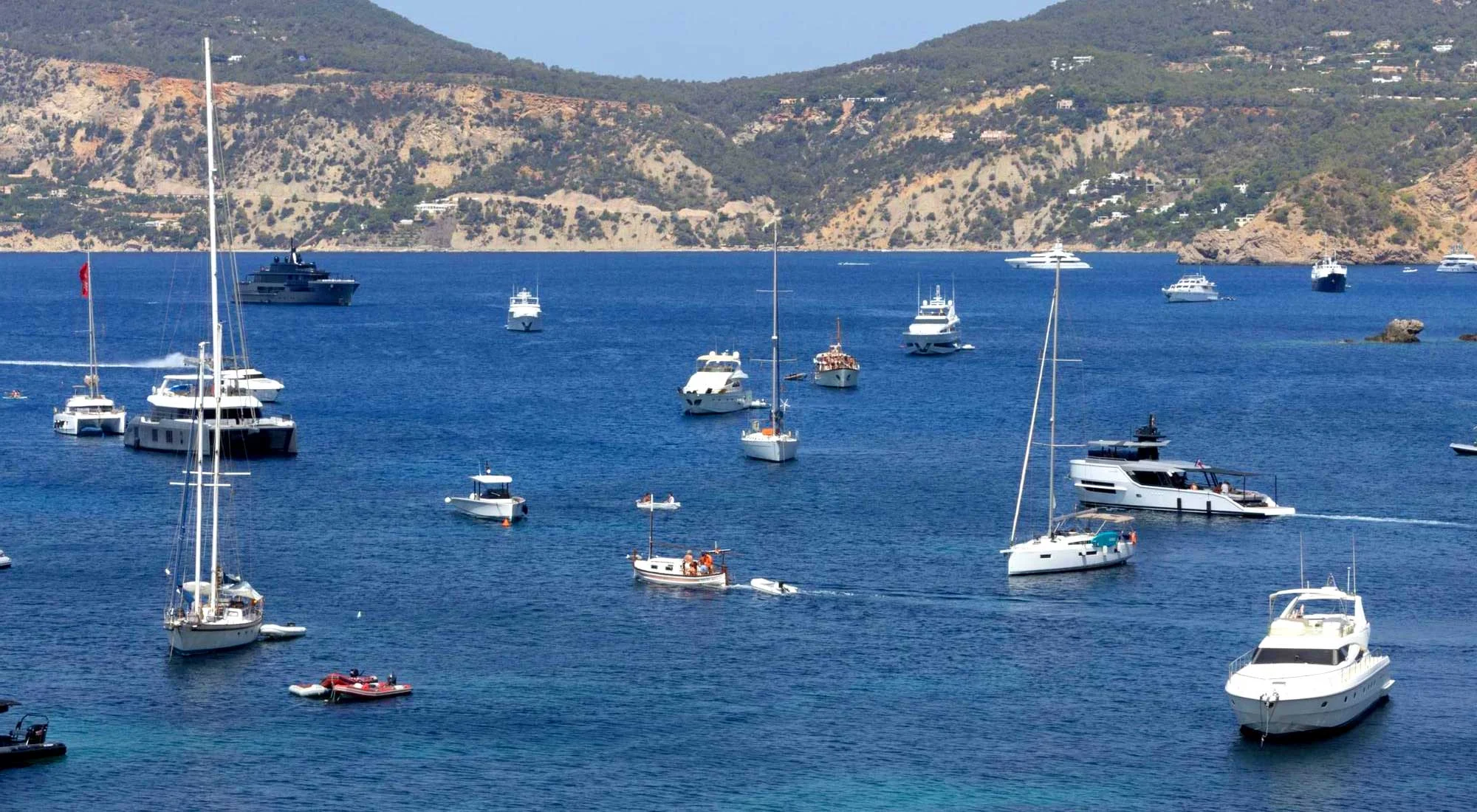
At least 4,813 boats were detected illegally anchored over Posidonia oceanica seagrass meadows in the waters of Ibiza and Formentera in 2025, according to the Balearic Government’s Posidonia Surveillance Service. Yet only 18 infringement reports were issued—15 in Ibiza and three in Formentera—representing just 0.37% of the boats detected.
The figures are particularly concerning because Posidonia surveillance operations were increased last year, according to the Balearic Government. “The numbers are surprising,” says Joan Carles Palerm, president of GEN (Grup d’Estudis de sa Naturalesa).
“It is surprising that so few reports are issued. I hope it is because people pull up their anchors and leave as soon as they see the authorities approaching,” Palerm says.
He considers the number of illegal anchoring incidents “significant”, particularly because illegal anchoring has been damaging large areas of Posidonia for years. These underwater meadows are essential to the health of the Mediterranean marine ecosystem.
Illegal anchoring is slowly destroying Ibiza’s seagrass meadows
Palerm compares the cumulative impact to “the Chinese water torture”: “It keeps wearing away at it, removing one square metre, then another…”
The problem is compounded by the fact that Posidonia oceanica has an extremely slow recovery rate. Once the seagrass is uprooted by an anchor or damaged by repeated anchoring, the affected area can take decades to recover.
According to Palerm, Posidonia meadows may recover at a rate of only around two centimetres per year. As a result, the cumulative damage cannot be naturally reversed in less than 30 or 40 years, he warns.
The GEN president believes the situation needs to be turned around by assessing whether more maritime surveillance is required—which he believes is likely—and by enforcing existing regulations more effectively.
He also calls for greater responsibility among recreational boaters and, particularly, professional maritime users.
“We have to learn once and for all, because this has been going on for ten years,” Palerm says. In his view, the authorities need to issue more infringement reports, remove boats when necessary and impose sanctions so that boat owners understand that anchoring over protected Posidonia meadows is not acceptable.
“The ultimate goal is for people to learn and stop dropping their anchors where they shouldn’t,” he says.
Environmental groups call for more surveillance along Ibiza’s coastline
Hazel Morgan, president of Amics de la Terra, also believes Ibiza needs greater environmental enforcement.
“There are not enough environmental officers in relation to the length of coastline we have and the number of boats along it,” Morgan says.
She also argues that the Balearic Government must address the broader problem of mass tourism and overcrowding along Ibiza’s coastline.
“The Government has to respond to the problem of the overcrowding of our coasts,” Morgan says, warning that “the lack of control is worsening the crisis affecting our Posidonia meadows.”
Why Posidonia is essential for Ibiza’s marine ecosystem
The importance of Posidonia oceanica goes far beyond protecting the seabed. The Mediterranean seagrass acts as an ecosystem comparable to a forest on land, providing shelter, food and habitat for a huge variety of marine species.
“Posidonia plays an important role because it is like a jungle or a forest,” Palerm explains. “A large part of the biodiversity along our coastline depends on it.”
The meadows provide shelter for juvenile fish and form an essential habitat for numerous species of invertebrates. Their disappearance would therefore result in a significant loss of marine biodiversity, he warns.
But the consequences would extend beyond marine life. The degradation of Posidonia could also affect water quality, beaches and the natural production and replenishment of sand.
As the seagrass meadows deteriorate, beaches could gradually lose both sand and width, potentially making them less attractive to visitors and creating another threat to Ibiza’s tourism industry.
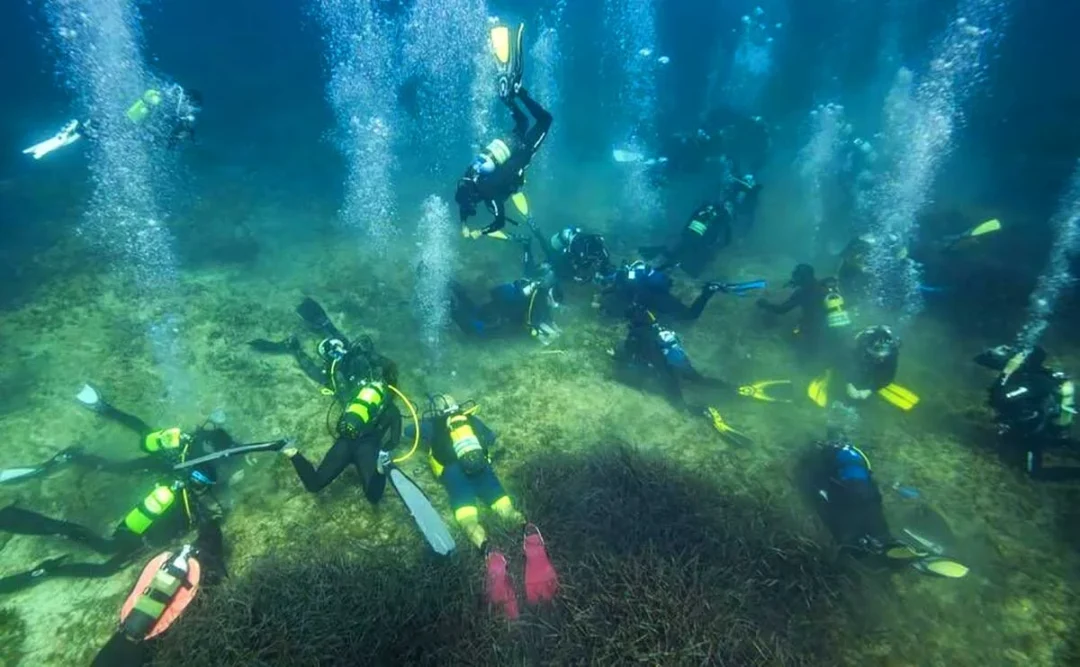
Damage to Posidonia could threaten Ibiza’s beaches and tourism
Palerm warns that the environmental damage caused by illegal anchoring could ultimately have economic consequences for one of Ibiza’s most important industries: tourism.
“The beaches will become more fragile and lose more sand. After storms, they will recover less of their sandy areas,” he explains.
This is because many of the organisms that live on and among the Posidonia meadows contribute to the formation of future beach sand. If these organisms disappear, the natural source of that sand is also lost.
For an island whose reputation depends heavily on the quality of its Mediterranean beaches, crystal-clear waters and marine environment, the long-term consequences could be substantial.
Experts say fines are essential to curb illegal anchoring
For the president of GEN, increasing surveillance alone will not solve the problem. Enforcement and effective sanctions are equally important, he argues.
“If thousands of boats are detected but only a few hundred actual fines are issued, the penalty does not have the deterrent effect it needs to have,” Palerm says.
With 4,813 illegal anchoring incidents detected in Ibiza and Formentera in 2025 but just 18 formal infringement reports issued, environmental organisations are calling for greater control and enforcement to protect the island’s Posidonia seagrass meadows and the wider Mediterranean ecosystem.