On 4 September 2023, Elena and Ignacio celebrated what should have been the happiest day of their lives. After a completely normal pregnancy and delivery, they welcomed their first child, Claudia, into the world.
Today, less than three years later, everything has changed.
The lives of Claudia’s parents, their extended families, and even the community of El Escorial, near Madrid, now revolve around a single mission: finding a treatment for one of the world’s rarest genetic diseases before time runs out.
As Elena speaks, Claudia’s soft babbling can be heard in the background. Although she has never been able to speak, she constantly tries to imitate the sounds she hears through her hearing aids. Her voice has become a powerful reminder of exactly what is at stake.
Elena tells their story with remarkable resilience, hope and determination—qualities that have inspired thousands of people to support the family’s growing campaign.
The First Signs That Something Was Wrong
Everything initially appeared normal.
However, during Claudia’s three-month medical check-up, doctors noticed she had hypotonia, a condition characterised by unusually low muscle tone.
“We had never even heard the word before,” Elena recalls. “They simply told us to encourage lots of physical activity and didn’t seem overly concerned.”
As the months passed, Claudia struggled to achieve important developmental milestones. One of the most worrying signs was her inability to hold her head upright.
Her parents began a relentless cycle of medical appointments, hospital visits and specialist consultations.
Eventually, during an emergency hospital visit, a neurologist noticed several physical characteristics that prompted further investigation.
A genetic test was ordered.
The results changed their lives forever.
A Diagnosis Few Families Ever Hear
Doctors confirmed that Claudia suffers from D-Bifunctional Protein (DBP) Deficiency, an ultra-rare inherited metabolic disorder caused by mutations in the HSD17B4 gene.
The condition affects the body’s peroxisomes—tiny structures inside cells that play a crucial role in breaking down fatty acids and removing toxic substances produced during normal metabolism.
Without a functioning D-Bifunctional Protein, toxic compounds accumulate and progressively damage the nervous system.
The consequences are devastating.
For Claudia, the disease has caused severe muscle weakness, developmental delays and a gradual loss of abilities she fought so hard to gain.
She did not begin crawling until she was nearly two years old.
Then came a moment her parents will never forget.
“On 25 September last year, she finally managed to stand up by herself,” Elena says emotionally. “We couldn’t believe it.”
But the celebration was painfully short-lived.
By December she had already begun losing strength again.
In April, she lost the ability to crawl altogether.
A Progressive Disease Changing Every Aspect of Family Life
As Claudia’s condition deteriorated, ordinary family life disappeared.
She could no longer attend nursery school, something she had loved because of the time spent with other children.
Her mother was also forced to leave work almost entirely.
“I first reduced my working hours by 50%. From 1 July, with a very heavy heart, I had to reduce them by 90%.”
Claudia now requires 24-hour care.
Her parents and both sides of the family have reorganised their entire lives around meeting her daily needs.
Although she cannot speak, she continues trying to communicate through sounds, facial expressions and smiles.
She has recently started experiencing vision problems and will soon need glasses.
Yet, despite everything, Elena smiles as she describes her daughter.
“She laughs all the time.”
That joy continues to drive the family forward—even during the darkest moments.
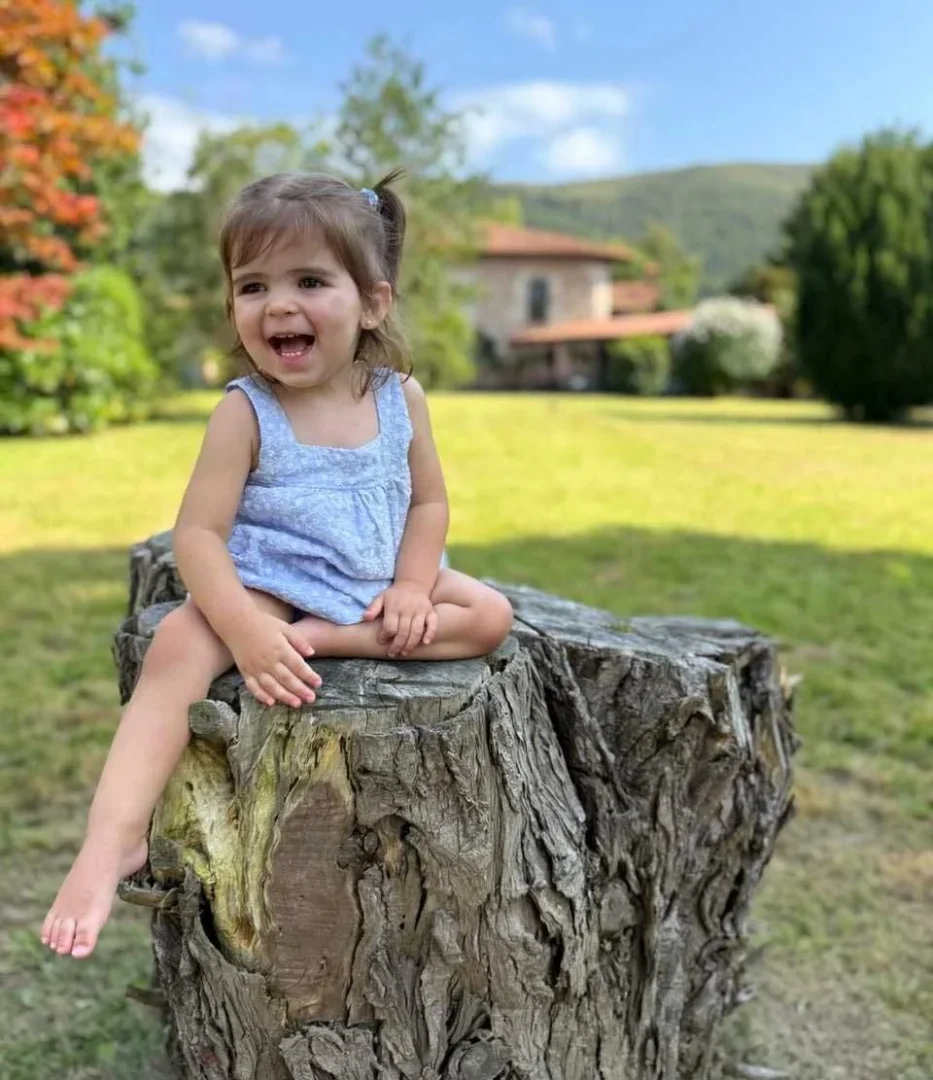
Sharing Claudia’s Story With the World
For months, Elena and Ignacio hesitated before making Claudia’s condition public.
Exposing your child during the most vulnerable period of her life is not an easy decision for any parent.
But as the disease progressed, they realised they had no alternative.
They launched The Claudia Challenge, hoping simply to reach people who might be willing to help.
The response exceeded every expectation.
Thousands of supporters have followed their journey through social media, fundraising events and community initiatives organised by volunteers, neighbours and local organisations.
The campaign has transformed into a growing movement united by one objective:
Give Claudia a chance.
The Biggest Obstacle Is No Longer Science—It’s Time
The emotional weight of Claudia’s story is impossible to separate from the scientific challenge behind it.
For Elena, one sentence has become a constant refrain.
“The problem is time.”
She repeats it often—not because she has lost hope, but because she understands exactly what is at stake.
D-Bifunctional Protein (DBP) Deficiency is a progressive neurodegenerative disorder. Every month that passes allows more irreversible neurological damage to occur, making the race to develop a treatment increasingly urgent.
Yet, despite the devastating diagnosis, there is now something that did not exist just months ago:
A genuine scientific opportunity.
A Spanish University Opens the Door to Hope
After months of contacting specialists, researchers and institutions around the world, Claudia’s family finally received the news they had been praying for.
A Spanish university agreed to launch a dedicated research programme focused on Claudia’s condition.
For Elena and Ignacio, it felt like someone had finally opened a door that had remained firmly shut.
To make the project possible, they also created the Association for the Research and Treatment of Peroxisomal Diseases, a non-profit organisation designed to coordinate fundraising efforts, support scientific collaborations and accelerate every stage of the project.
Another major milestone soon followed.
One of Spain’s leading paediatric hospitals, Hospital Sant Joan de Déu in Barcelona, joined the initiative and is currently analysing the results of a biopsy taken from Claudia.
Researchers hope the samples will provide essential information for the next phase of development.
“The ultimate challenge is reaching the brain,” Elena explains.
That is where the disease causes its most devastating damage—and where any future treatment will need to work.
From Spain to the United States: International Experts Join the Mission
Until recently, Claudia’s family believed they were fighting almost alone.
Only a handful of cases of DBP Deficiency have been identified worldwide.
Through years of searching, Elena has managed to connect with just two other families affected by the same condition—one in the United States and another in the United Kingdom.
Those contacts unexpectedly opened the door to something extraordinary.
Leading researchers, biotechnology specialists and internationally recognised genetic experts in the United States became aware of Claudia’s case.
Instead of seeing an impossible challenge, they saw an opportunity.
Several research teams have now expressed their willingness to collaborate on developing a personalised gene therapy specifically designed for Claudia.
For a disease this rare, such international scientific interest is exceptionally unusual.
It represents a level of momentum that very few families affected by ultra-rare disorders ever experience.
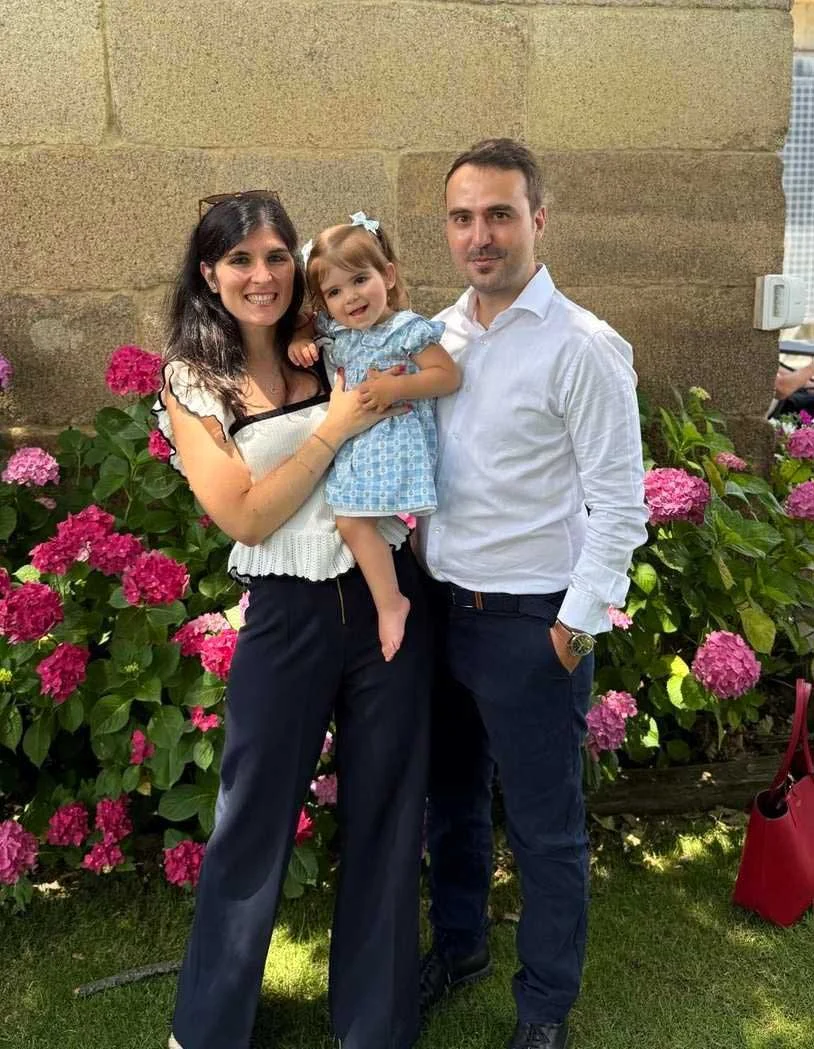
A Gene Therapy Designed to Correct the Genetic Error
The research team’s ambition goes far beyond slowing the progression of Claudia’s illness.
Their objective is to repair the genetic mutation itself.
As Elena explains:
“The goal is to perform gene therapy—to change the single letter that is mutated in her gene.”
In simple terms, scientists aim to correct the underlying genetic mistake responsible for the disease rather than merely treating its symptoms.
If successful, the therapy could stop the chain reaction that gradually destroys Claudia’s nervous system.
This is precisely why researchers consider the project so significant.
Although the treatment would initially be developed specifically for Claudia, the knowledge generated could become the foundation for treating future patients diagnosed with the same mutation anywhere in the world.
It is an approach that reflects the growing promise of precision medicine and personalised genetic therapies, where treatments are designed around the DNA of an individual patient rather than broad disease categories.
For families affected by ultra-rare diseases, this represents one of the most exciting frontiers in modern medicine.
But scientific breakthroughs require one thing above all else:
Funding.
And once again, another obstacle stands in the way.
Time.
Why €3 Million Could Change Everything
For Elena, there is no point in avoiding the number.
She wants people to hear it.
She wants them to remember it.
“Write it down,” she says. “People need to know.”
The figure is €3 million.
At first glance, it seems overwhelming.
But for the scientists now working on Claudia’s case, that funding represents far more than a financial target—it is the bridge between hope and reality.
The first stage of the project is already underway, requiring an initial €300,000 to begin laboratory testing and early validation work.
The real challenge comes next.
The full €3 million would finance the crucial preclinical development needed before any treatment could move towards clinical use. That includes experimental validation, development of an animal model, safety studies and the regulatory preparation required before human trials can even be considered.
Only after completing these stages could researchers begin exploring the next phase of bringing the therapy to patients.
For most families, such a figure would seem impossible.
For Elena and Ignacio, it has simply become the next obstacle to overcome.
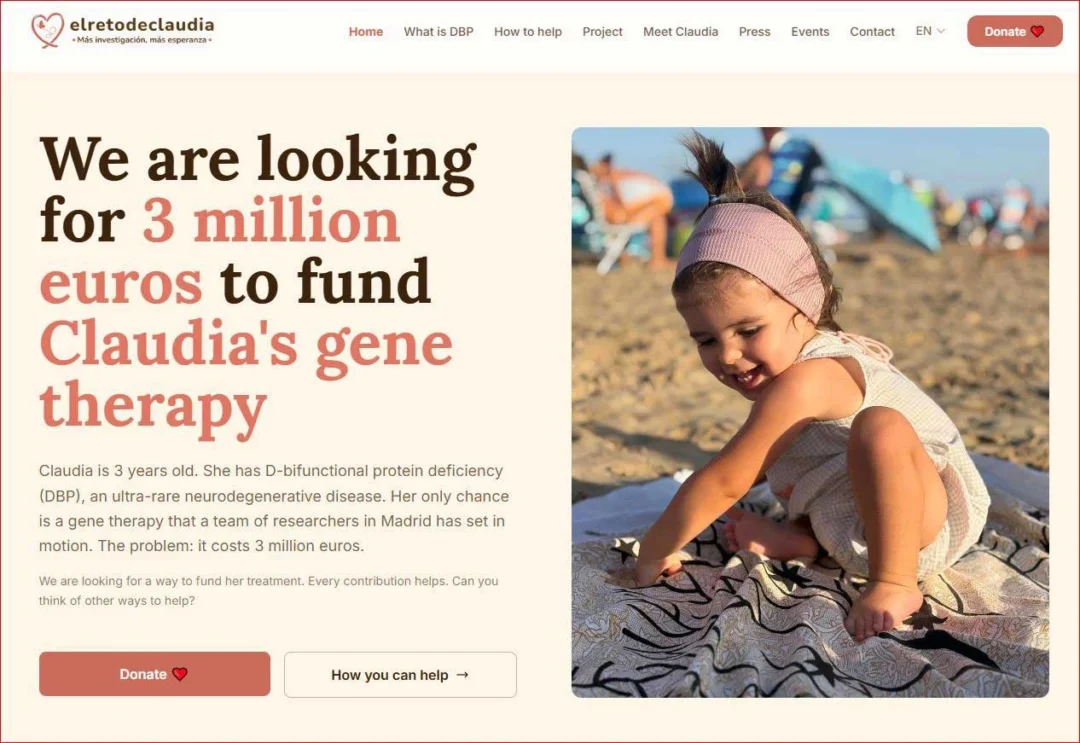
“Money Won’t Stop Us”
When researchers first explained the projected cost, the family was stunned.
“It was terrifying when they told us,” Elena admits.
Then, almost immediately, came the determination that has carried them through every setback since Claudia’s diagnosis.
“But money isn’t going to stop us.”
Those words have become the driving force behind an international fundraising campaign that now stretches far beyond their hometown.
The family’s goal is no longer limited to individual donations.
Through their association and the growing international visibility of Claudia’s story, they are appealing directly to major companies, philanthropic foundations, charitable organisations and private donors capable of supporting a project of this scale.
Their message is simple.
This is not only about helping one child.
It is about accelerating research into an ultra-rare genetic disease that has received almost no scientific attention because so few patients exist worldwide.
Every contribution helps move the research forward.
Every partnership could shorten the time needed to reach the next milestone.
And for Claudia, time is the one resource that cannot be replaced.
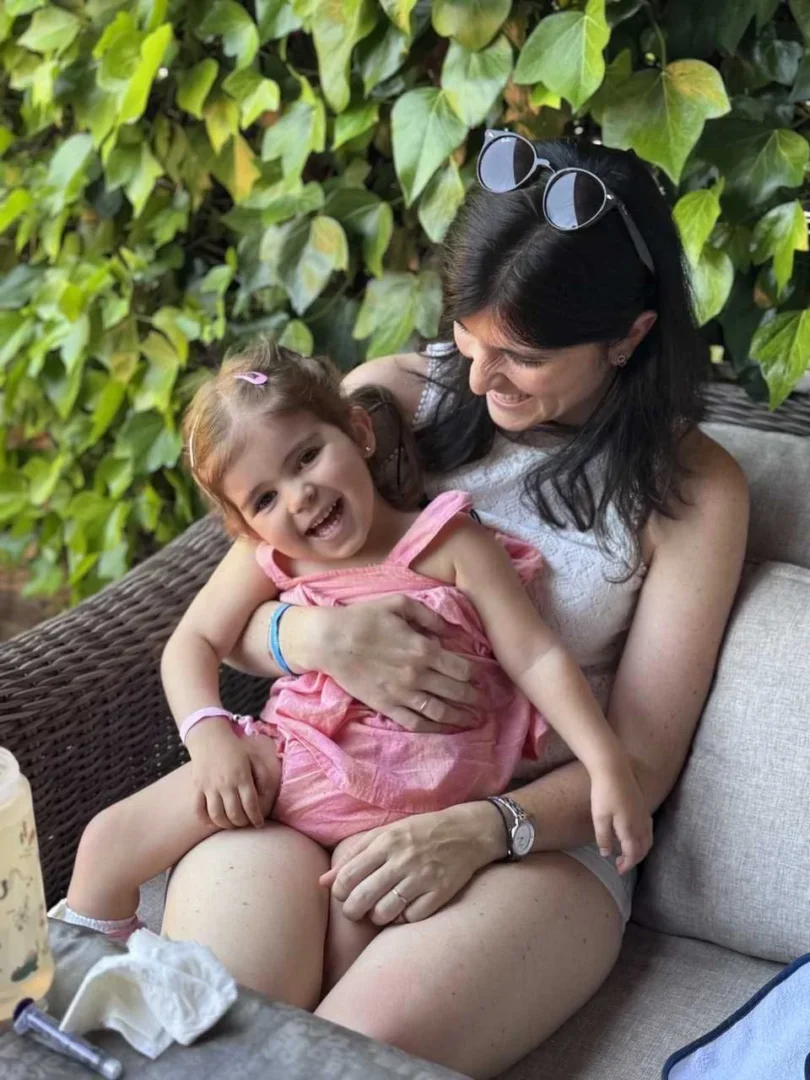
A Treatment That Could Help More Than One Child
Although the proposed therapy is being designed specifically for Claudia’s unique genetic mutation, researchers believe the knowledge gained could extend far beyond a single patient.
Ultra-rare diseases have historically received limited investment because of the small number of affected families.
However, advances in gene editing, precision medicine and personalised gene therapy are beginning to change that landscape.
Each successful project creates new scientific knowledge, new laboratory techniques and new treatment pathways that can benefit future patients diagnosed with similar mutations.
In other words, helping Claudia could contribute to research that benefits children around the world facing equally rare genetic disorders.
It is one reason why international researchers have embraced the project with such enthusiasm.
A Community Refusing to Give Up
Back in El Escorial, Claudia’s story has become a symbol of resilience.
Neighbours organise charity events.
Schools hold fundraising activities.
Local businesses contribute whenever they can.
Thousands of people have shared her story online, helping transform a family’s private struggle into an international appeal for hope.
Yet, every morning, Elena and Ignacio wake up with exactly the same purpose.
Not media interviews.
Not fundraising campaigns.
Not scientific meetings.
Their only real priority is caring for their daughter.
Everything else exists for one reason alone.
To give Claudia the future every child deserves.
A Race the World Can Help Win
The science is ready.
The researchers are ready.
The institutions are ready.
What remains is securing the funding quickly enough to give the project the opportunity it deserves.
For families affected by ultra-rare diseases, breakthroughs rarely happen overnight.
They are built through years of persistence, collaboration and extraordinary generosity from people willing to believe that even the rarest conditions deserve life-changing research.
Claudia’s family refuses to measure success solely by the size of the challenge before them.
Instead, they measure it by every new supporter, every new scientist, every new donation and every new opportunity created since they chose to tell their daughter’s story.
Because, in the end, this is about much more than raising €3 million.
It is about proving that no child should be left behind simply because their disease is too rare to attract attention.
For Elena and Ignacio, the mission remains exactly the same as it has been since the day Claudia was born.