Sant Josep funds seven monitoring stations along its coastline to track key indicators including shoot density, flowering, invasive species and the presence of noble pen shells
Sant Josep is stepping up the monitoring of its Posidonia oceanica meadows in Ibiza with a new scientific survey campaign. A total of 18 volunteers and technical specialists took part on September 25 and 26, collecting data from the seabed around es Vedrà and es Freus between Ibiza and Formentera, near the islet of des Caragoler.
The initiative is part of the Xarxa de Monitoratge de la Posidònia de les Illes Balears, a monitoring network promoted by the Balearic Government to track the evolution of Posidonia oceanica meadows and identify potential changes in their conservation status.
During the dives, participants recorded a range of indicators relating to the condition of the seagrass meadows. These included Posidonia shoot density per square metre and seabed coverage, as well as the presence of flowers and fruit, invasive species and noble pen shells (Pinna nobilis).
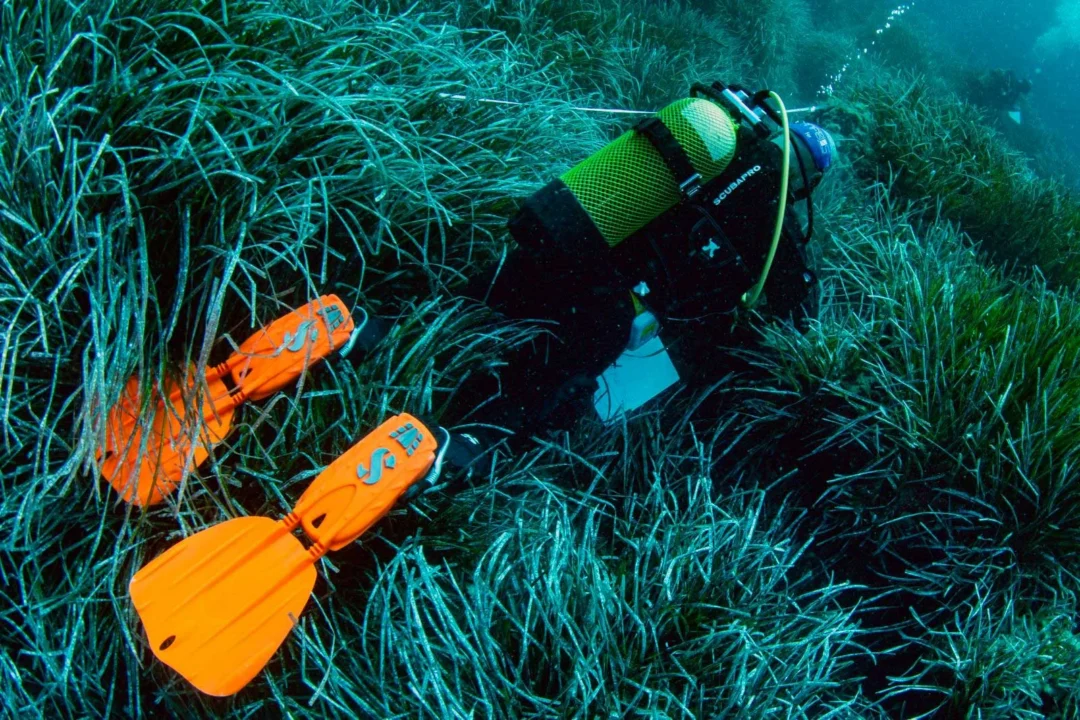
Seven monitoring stations in Sant Josep
Sant Josep Town Hall covers the costs required to carry out these monitoring campaigns along the municipality’s coastline, including diving equipment and marine transport. This year’s survey was carried out with the support of Orcasub, a diving centre in Cala Tarida, and Anfibios, based in Platja d’en Bossa.
In addition to the two official monitoring stations located at es Vedrà and the islet of des Caragoler, the local council funds five additional stations at different points along the coastline: la Xanga, Porroig, Cap Llentrisca, Cala d’Hort and sa Conillera.
The monitoring is also carried out with the support of the GEN-GOB Marine Area, helping to expand the available data on the condition of Posidonia meadows along the Sant Josep coastline.
Other areas of the municipality are also included in the wider monitoring network. Salvem sa Badia and IbizaPreservation monitor the stations located at Cala Bassa and Cala Vedella.
A monitoring programme powered by volunteers
The Balearic network conducts annual surveys to track the evolution of Posidonia meadows and build scientific data on one of the Mediterranean’s most important marine ecosystems. According to Sant Josep Town Hall, volunteers play a key role in ensuring the continuity of the programme.
Felicia Bocú, Councillor for Environment, Sustainability and Coastal Affairs, stressed the importance of maintaining this long-term monitoring work.
“Posidonia is key to marine biodiversity, the quality of our waters and the preservation of our coasts,” she said.
The local council says the monitoring programme helps improve understanding of the condition of the coastline and supports efforts to protect Posidonia oceanica, a species considered fundamental to Ibiza’s marine ecosystem.