The 2026 grape harvest in Ibiza is already underway, and the island’s main wine producers agree that this year’s vintage is shaping up to be considerably better than the previous two. After years of drought and extremely low yields, wineries are seeing healthier grapes and a significant recovery in production, although high summer temperatures remain a major challenge.
Some producers began harvesting several weeks ago, while others have only just started. At Ibizkus, technical director and winemaker David Lorenzo Álvarez expects to harvest between 60,000 and 70,000 kilograms of grapes this season.
“We are starting little by little so that we can pick each variety at its ideal moment,” Álvarez explains. The winery began with small batches, harvesting around 800 kilograms on consecutive days as the grapes reached the desired level of ripeness.
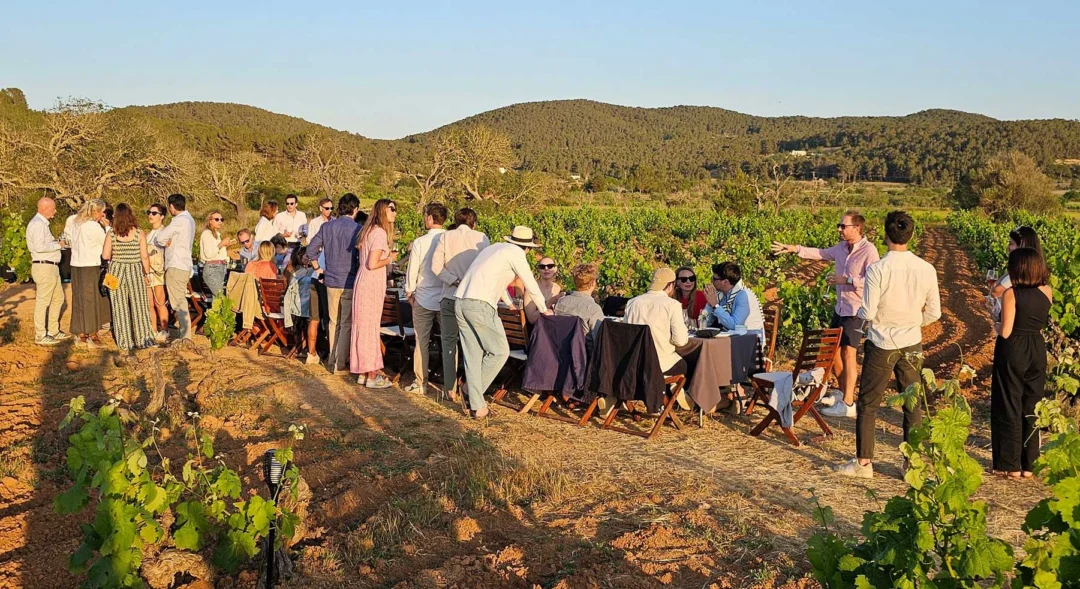
Ibiza wineries expect a stronger 2026 vintage
At Can Maymó, manager Toni Costa began harvesting on July 27. Although the winery has made steady progress, Costa says they are still in the early stages of the harvest.
“We are five or six days ahead of last year,” he says, describing the current situation as “very good.” The combination of high temperatures and healthy grapes could result in around 15% more production than last year.
Meanwhile, Can Rich began its harvest on July 28, starting with white grapes destined for sparkling wine. According to manager Álvaro Pérez, these grapes need to be harvested slightly earlier because the wine undergoes a second fermentation in the bottle.
Most of Can Rich’s white grapes are already stored in the winery, with just one plot still to be harvested. The team has now moved on to the rosé varieties, which follow a process similar to that used for white wine.
Up to 80,000 bottles expected at Ibiza’s largest winery
Can Rich produces between 70,000 and 80,000 bottles of wine every year, making it the largest winery in Ibiza, according to Pérez.
Last year, harvesting began on July 29 and continued until September 2, when the final plot was picked. This year, the winery could potentially finish the harvest within two or three weeks, although Pérez stresses that it is still too early to make a firm prediction.
The final timetable depends on grape maturity levels, weather conditions and regular checks carried out in each vineyard. Samples are taken from individual plots to monitor how the grapes are developing before deciding when they should be harvested.
At Ibizkus, production is expected to approach 50,000 bottles. That would represent a significant recovery from the previous season, when the winery produced only around 26,000 or 27,000 bottles.
The low production followed the devastating conditions of 2024, when the winery lost approximately 85% of its grapes. Both 2024 and 2025 were described by Álvarez as extremely difficult years marked by drought, low yields and considerable frustration.
Looking further ahead, however, the winemaker remains optimistic. If the island receives sufficient rainfall at the right time, Ibizkus hopes to eventually approach 100,000 bottles per year.
For Can Maymó, the scale is considerably smaller. Costa describes the winery as a small family-run operation, with just a handful of people involved, including himself, his wife and his son. This year’s production could reach around 20,000 bottles, a figure he considers a very positive result.
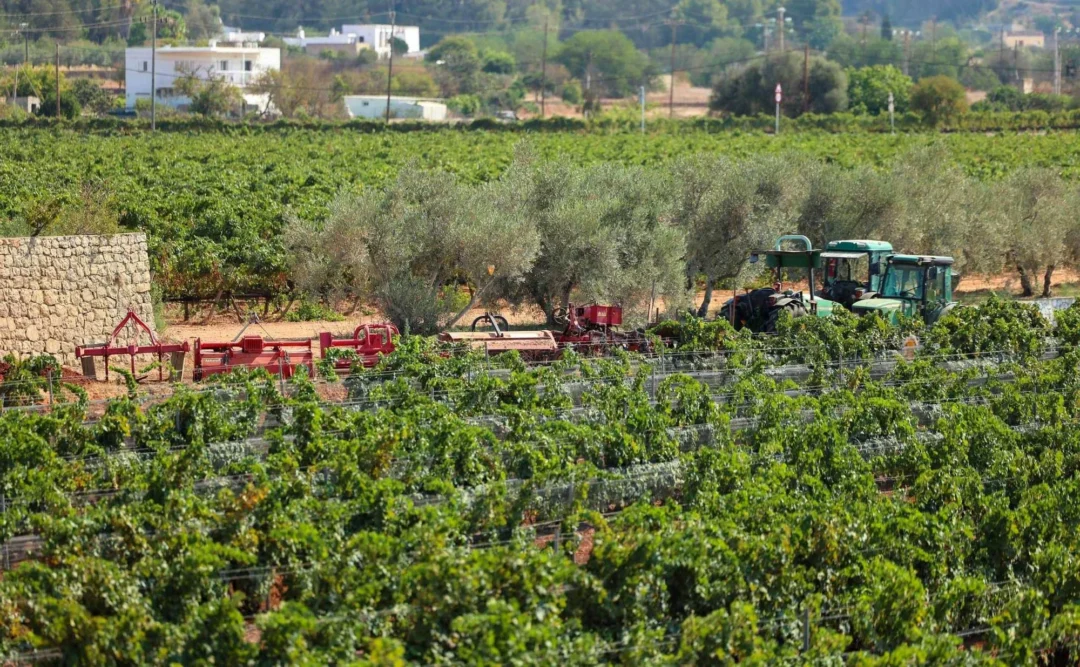
Extreme summer heat creates new challenges for Ibiza winemakers
Despite the optimism surrounding the 2026 Ibiza wine harvest, extreme temperatures are making the work considerably harder.
Álvarez says that harvesting in September would be ideal because working outdoors during August heat is particularly demanding. During one recent day, temperatures reached 36°C, forcing the team to endure intense heat while harvesting by hand.
For the Ibizkus winemaker, August harvesting is particularly challenging because the winery relies heavily on manual grape picking. The combination of physical work and extreme temperatures makes the process exhausting for vineyard workers.
Pérez, from Can Rich, highlights another problem: extreme heat can temporarily slow down the vines, particularly red grape varieties.
High temperatures create both water stress and thermal stress, meaning the vines can effectively stop functioning above certain temperature thresholds. Winemakers may then have to wait for conditions to cool before the plants resume their normal activity and complete the ripening process.
He also points out that the extreme temperatures experienced on Ibiza, particularly in June, are far from typical of the island’s historical climate.
Earlier harvests reflect Ibiza’s changing climate
Toni Costa has witnessed these changes firsthand. He began working in the wine industry in 1995, more than three decades ago, and says the island’s climate has changed dramatically.
“It is not only that summers are hotter,” Costa explains. “Winters are no longer cold either.” He remembers a time when Ibiza regularly experienced several cold days and occasional frosts during winter.
The change is also reflected in harvest dates. When Costa started working in the industry, harvesting typically began in mid-September. Today, some Ibiza wineries are already harvesting in July.
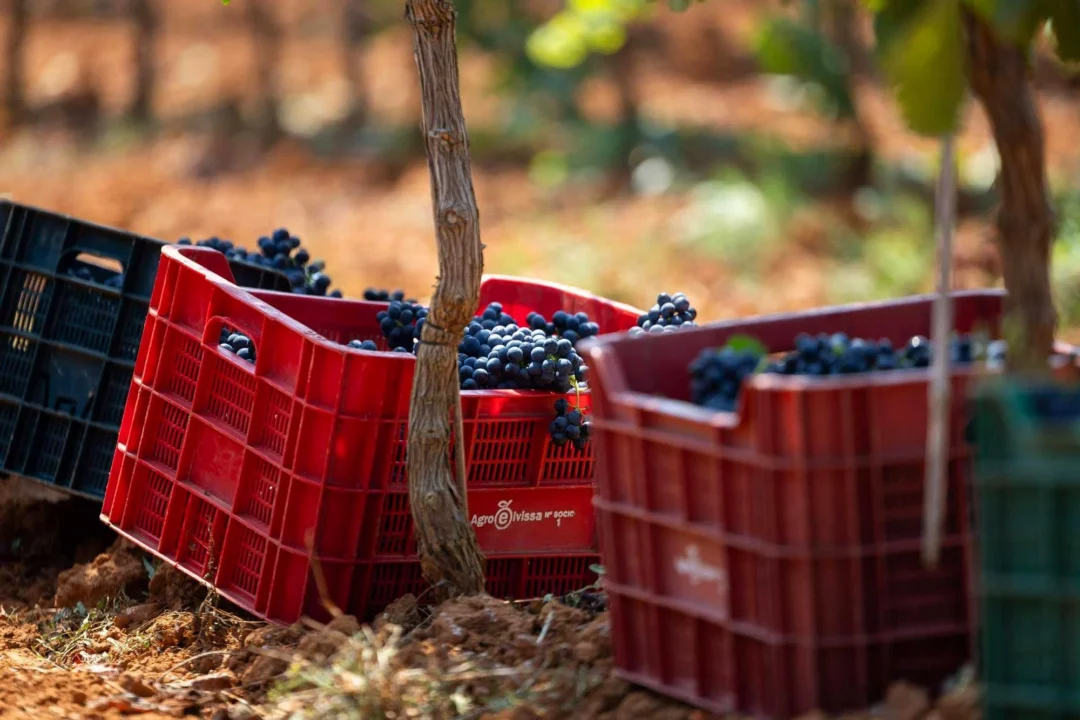
Drought recovery brings healthier grapes
The improvement this year is particularly noticeable after several years of severe drought.
Costa believes this year’s harvest is clearly better than last year’s, when the vineyards were significantly drier. He points to the rainfall received last year as one of the reasons why production could increase by at least 15% this season.
Álvarez, who has already experienced 23 grape harvests, also sees a clear recovery. He describes 2024 and 2025 as particularly difficult years, with drought putting considerable pressure on the vines and drastically reducing production.
This year, however, the grapes are developing more favourably, with larger, healthier bunches and better-sized fruit. That could allow winemakers to produce wines that are more relaxed, fresh and fluid, with slightly lower alcohol levels — an increasingly important objective for many producers.
Rainfall could determine the final outcome of the Ibiza vintage
For Ibiza’s winemakers, the biggest unknown is now rainfall.
Álvarez believes that between 40 and 50 litres of rain — or ideally 80 to 90 litres — would help slow down the ripening process and give the vines some relief after a summer marked by repeated heatwaves and heavy humidity.
According to the Ibizkus winemaker, the island experienced substantial rainfall during autumn and winter, followed by relatively little rain in spring and a summer characterised by intense heatwaves and high humidity. These conditions have accelerated the ripening process.
Some rainfall would therefore be welcome, although its timing is crucial. Vineyards where the grapes are already close to their ideal maturity could actually be negatively affected by rain. For plots that still have more time before harvest, however, a moderate amount of rainfall could be highly beneficial.
Rain would allow the vines to cool down and give winemakers more time to wait for the right moment to harvest. The grapes may temporarily swell after rainfall before returning to their normal size, potentially allowing producers to harvest under conditions more typical of autumn, which is precisely what many Ibiza winemakers are hoping for.